-
·
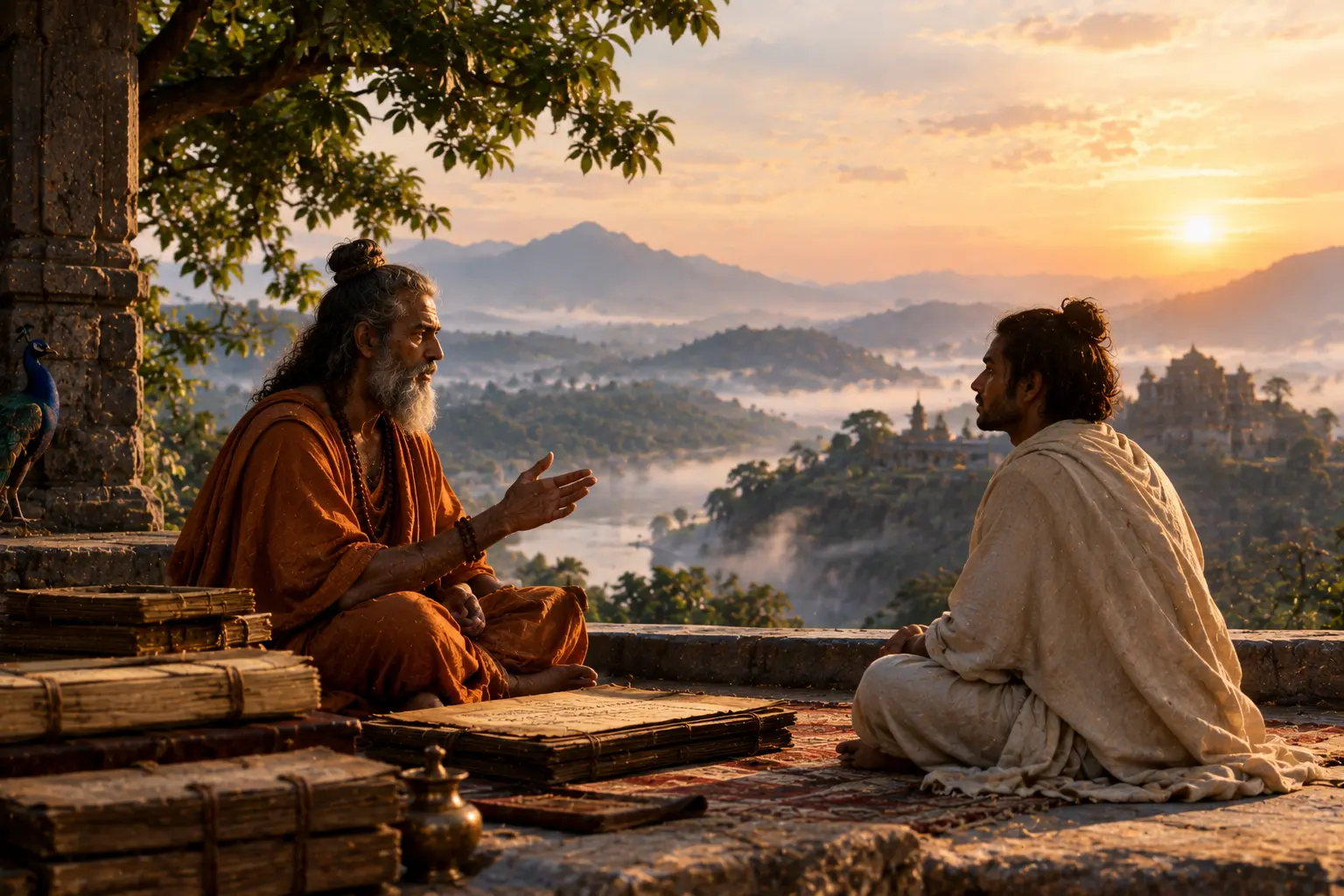
The Yoga Vasistha: The Longest Argument That Nothing Is Happening
A prince comes home from a pilgrimage at sixteen and stops functioning. He will not eat properly. He will not take up his duties. He tells the court that he has looked at wealth, at power, at pleasure, at the body, at time, at death, and can find nothing in any of it worth wanting.…
-
·
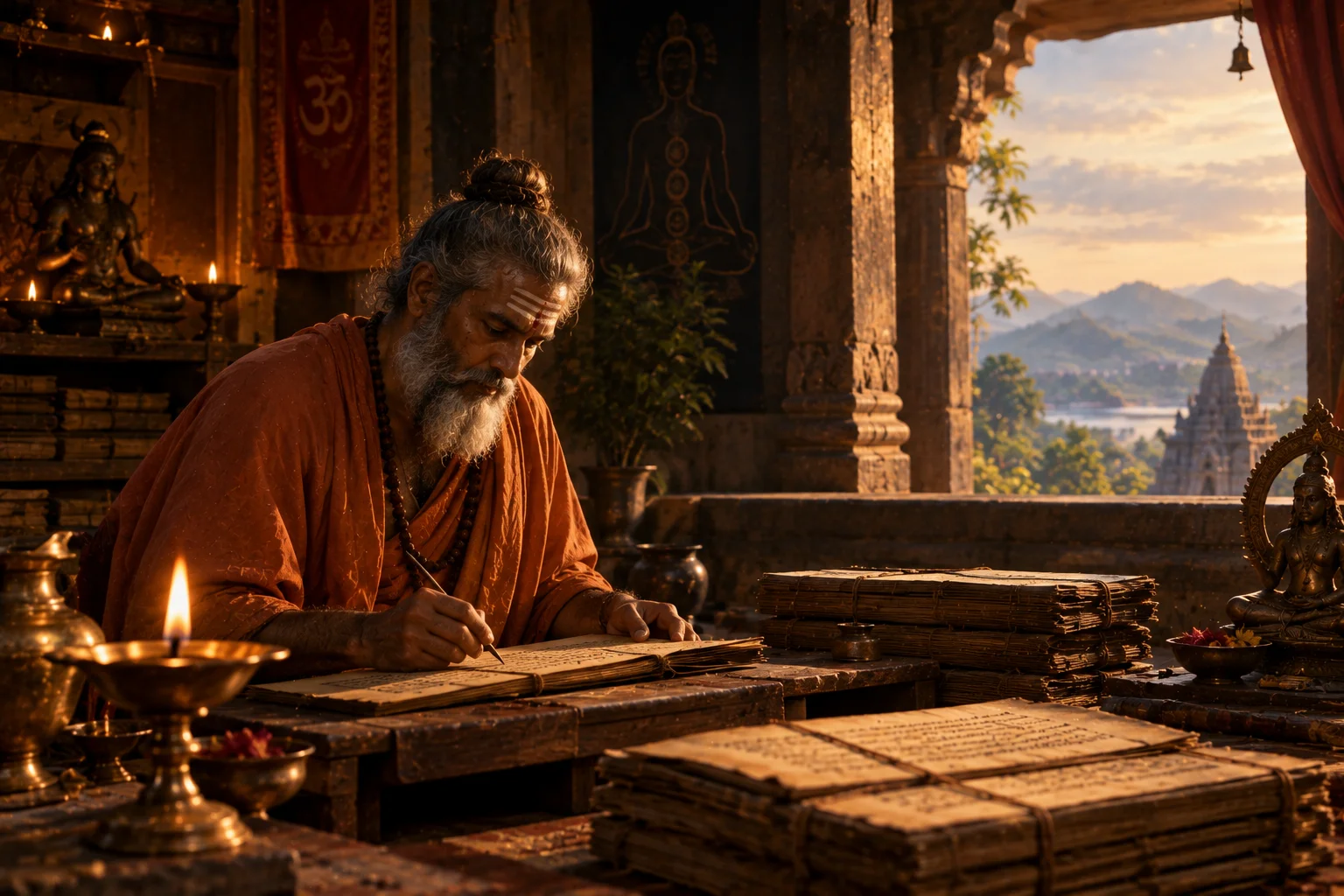
The Hatha Yoga Pradipika: How a Fifteenth-Century Compilation Became the Standard
Svatmarama says in his opening verses that he is not inventing anything. He states that he has gathered what was scattered, and he names his predecessors, listing teachers of the tradition he is drawing on. This is unusual honesty for a fifteenth-century Sanskrit text, and it turns out to be accurate. Modern comparison with earlier…
-

·
The Amritasiddhi: The Oldest Hatha Text Is Not What Anyone Expected
For most of the twentieth century, the story of hatha yoga’s origin was reasonably settled. It emerged from the Nath tradition, associated with Gorakhnath, somewhere around the eleventh or twelfth century, within a Shaiva context, and the Hatha Yoga Pradipika of the fifteenth century was its major statement. Then a manuscript that had been sitting…
-

·
The Yoga Sutras: How a Text of 195 Lines Was Assembled
The Yoga Sutras of Patanjali is around 195 short lines, depending on the recension. Read aloud without commentary, the whole thing takes under an hour. It contains almost no explanation, no examples, no argument, and no stories. This is not a stylistic failure. A sutra is a compression format. The word means thread, and it…
-

·
The Bhagavad Gita: A Reader’s Guide
Seven hundred verses, eighteen chapters, and a setting that lasts about four minutes. Two armies are drawn up. A man asks his charioteer to drive him into the space between them so he can see who he is about to fight. He sees cousins, teachers and grandfathers, and he puts down his bow and says…
-

·
The Upanishads: What They Are and Which Ones Matter
Ask how many Upanishads there are and you will get answers ranging from ten to over two hundred. Both are correct, which is confusing until you understand what the word is doing. Upanishad is not a title. It is a category. Texts have been composed under that heading for well over two thousand years, and…
-

·
Patanjali and the Yoga Sutras
We do not know when Patanjali lived. We do not know where. We do not know whether he was one person. For the author of the foundational text of classical yoga, the biographical record is close to empty, and what fills the gap is mostly legend, including a charming story that he descended from the…
-
·
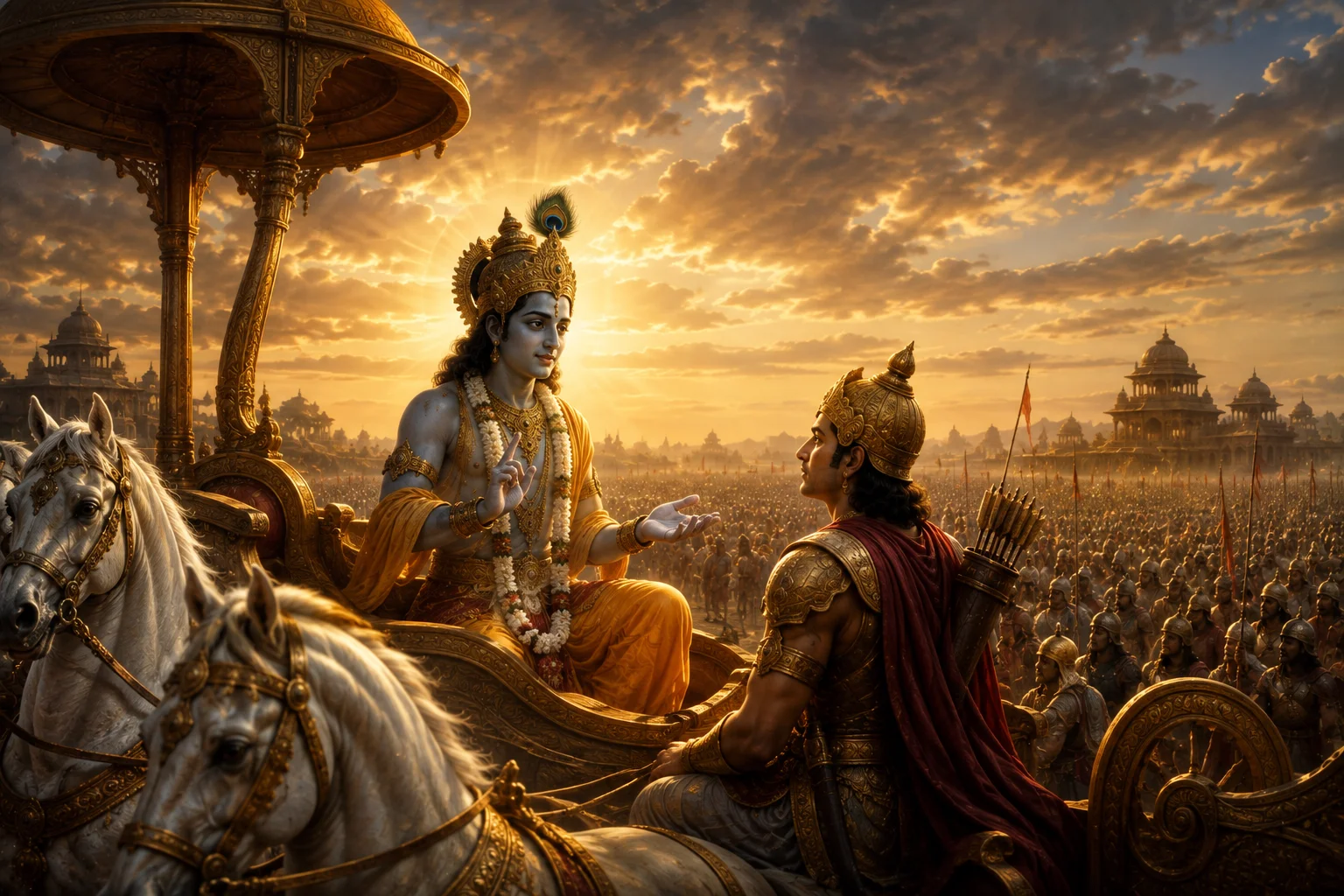
The Bhagavad Gita and the Three Paths of Yoga
Two armies are drawn up facing each other, and one man asks his driver to take him into the gap between them so he can see who he is about to fight. He looks. And in the ranks opposite he finds his cousins, his teachers, the grandfather who raised him, men he has eaten with…

Category: Yoga Texts & Scriptures
Yoga is more than postures and breath—it is a profound journey into the nature of the mind, consciousness, and self. For thousands of years, sages and seekers have explored these questions through a remarkable body of sacred texts and philosophical teachings.
In Yoga Texts & Scriptures, discover the wisdom preserved in the Vedas, Upanishads, Bhagavad Gita, Yoga Sutras, Samkhya Karika, Hatha Yoga Pradipika, Amritasiddhi, and Yoga Vasistha. Each text opens a different doorway into the ancient understanding of yoga—from meditation and self-knowledge to liberation, consciousness, subtle practices, and the ultimate nature of reality.