-
·
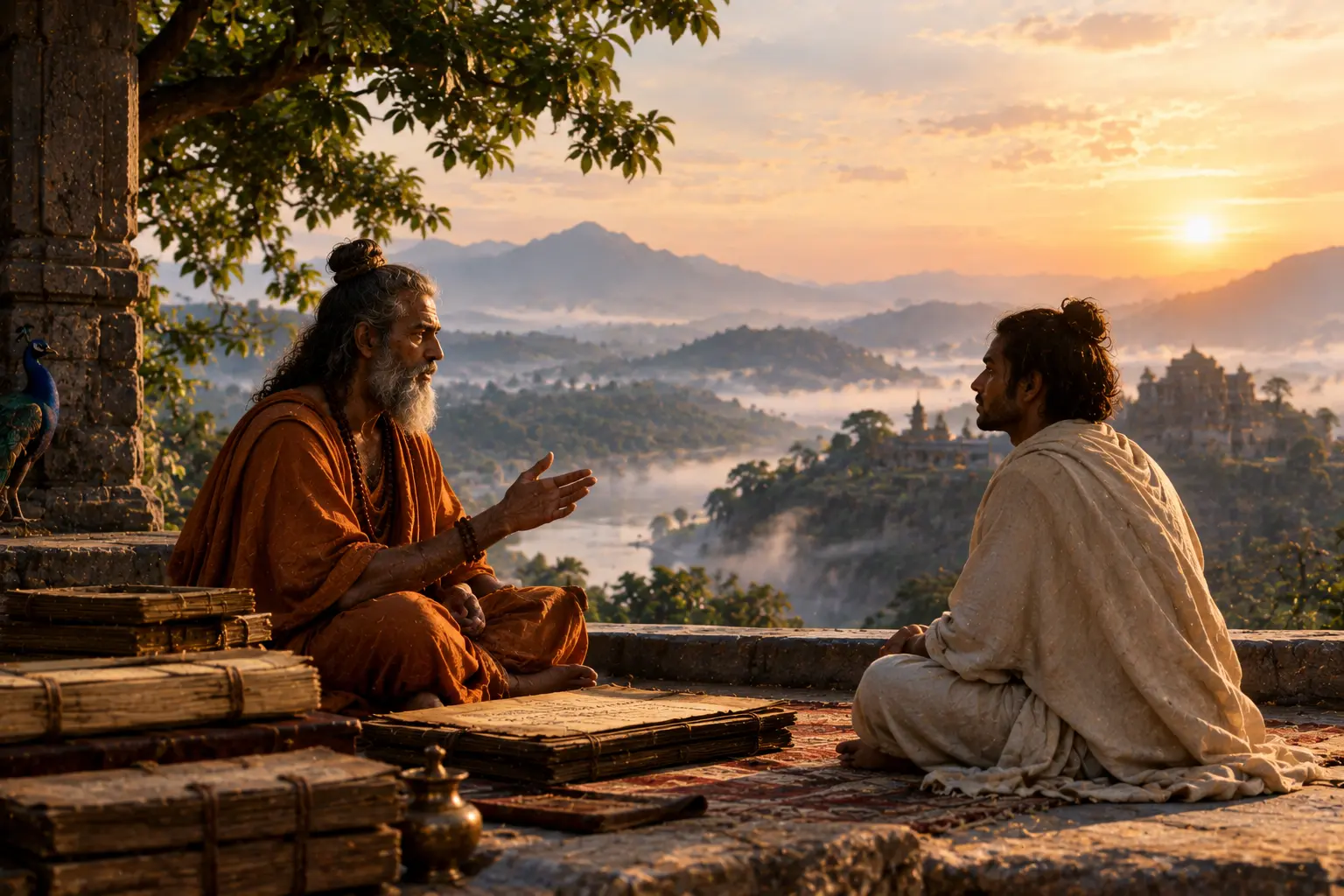
The Yoga Vasistha: The Longest Argument That Nothing Is Happening
A prince comes home from a pilgrimage at sixteen and stops functioning. He will not eat properly. He will not take up his duties. He tells the court that he has looked at wealth, at power, at pleasure, at the body, at time, at death, and can find nothing in any of it worth wanting.…
-
·
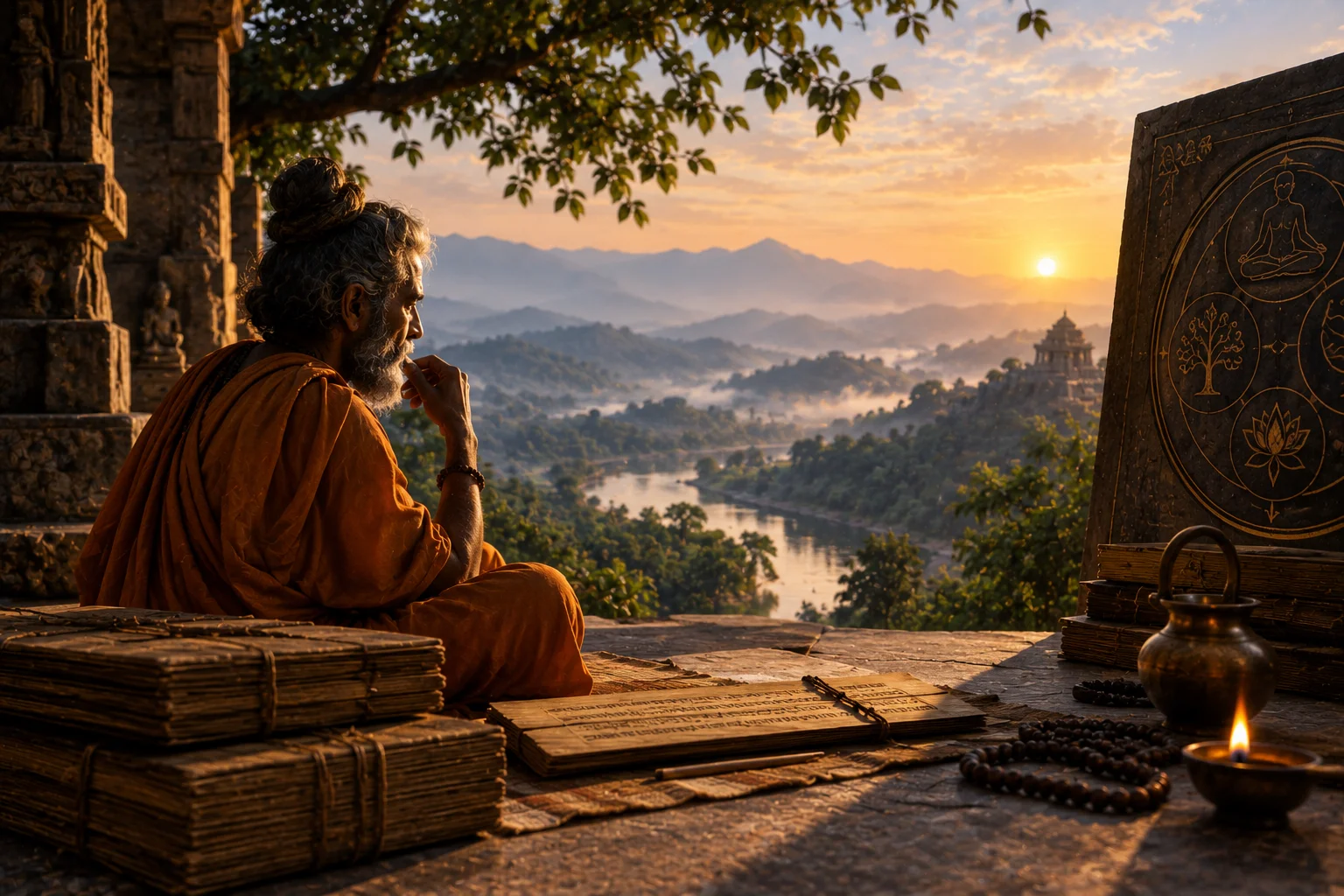
The Samkhya Karika: The System Yoga Is Built On
Open almost any yoga philosophy book and you will meet the gunas, the three qualities. Sattva, rajas, tamas. Clarity, activity, inertia. They turn up in discussions of diet, of temperament, of practice, of time of day. Almost nobody mentions where they come from, which is a text of seventy-two verses composed around the fourth century…
-

·
Samsara: The Cycle Nobody Wanted
Reincarnation, as it is usually presented in the West, sounds like a bonus. More lives. Another chance. The reassurance that death is not final. Indian traditions do not treat it that way at all. Samsara is presented as a problem, and the entire apparatus of Indian religious practice is aimed at getting out of it.…
-

·
Ahimsa: The Principle of Non-Violence
The word is a negation. A-himsa. Not-harm. Sanskrit has no positive term for the idea, which means the concept is constructed by subtraction: you begin with the impulse to injure and you remove it. That grammatical detail matters more than it looks, because it shapes how the traditions treat the principle. Ahimsa is not a…
-

·
Dharma: What the Word Actually Means
There is no English word for dharma, and translators have been apologising about it for two hundred years. Duty. Law. Righteousness. Religion. Order. Virtue. Nature. Teaching. Each catches part of it and none catches the whole, and the reason is that dharma is not a concept with one meaning. It is a concept with a…
-

·
Dhyana: What Meditation Actually Is in Yoga
Patanjali defines meditation in nine Sanskrit words, and the definition is almost entirely about continuity. Tatra pratyayaikatanata dhyanam. Sutra 3.2. In that place, the uninterrupted flow of a single idea is meditation. Not effort. Not concentration. Flow. The Limb Before It Dhyana cannot be understood on its own, because it is defined against what precedes…
-

·
Karma: What the Word Actually Means
Karma is not a moral scoreboard, and it is not the universe getting even. The word means action. That is all it means, before any doctrine is attached to it. Karman, from the root kri, to do or make. In the earliest Vedic usage it refers specifically to ritual action, the correct performance of sacrifice.…
-
·
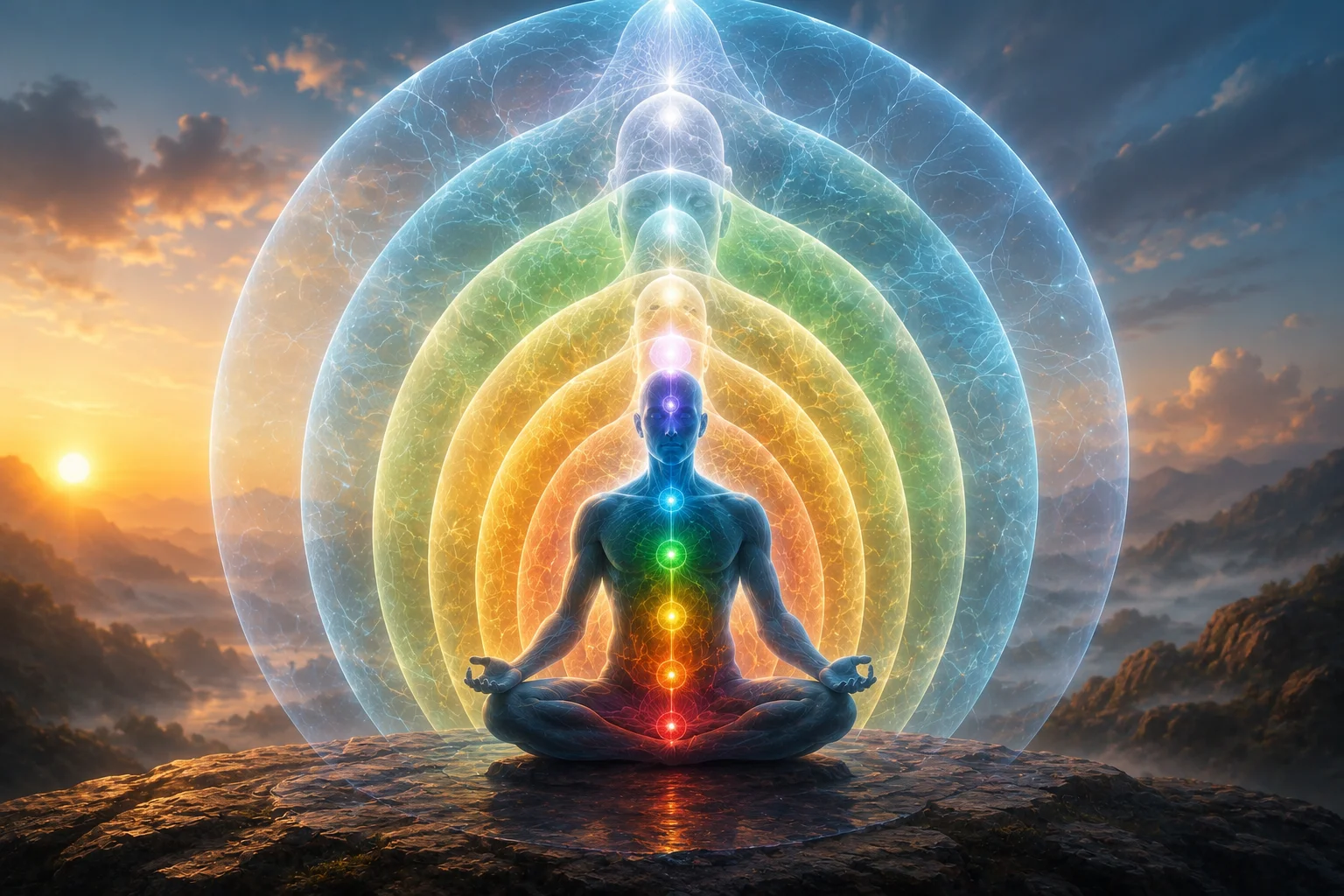
The Five Koshas: Yoga’s Map of the Human Being
A person, in this scheme, is five things wearing each other. The image the tradition uses is a sheath, kosha, the way a sword sits inside a scabbard. Each layer covers the one beneath it, and each is subtler than the last. It is one of the oldest attempts anywhere to map what a human…
-

·
What Does Yoga Really Mean?
Open the Rigveda, composed somewhere between 1500 and 1200 BCE, and the word yoga is already there. It mostly means harnessing horses to a chariot. Yoking The root is yuj, to join, to yoke, to harness. It is cognate with the English yoke, and the two words descend from the same Proto-Indo-European source. In its…
-

·
Moksha: Liberation and the Real Goal of Yoga
Ask what yoga is for and most modern answers describe a better version of the life you already have. Calmer. Healthier. More focused. The tradition’s own answer is that yoga is for getting out. The Problem It Solves Moksha means release. It comes from the root much, to free or let go, and it is…

Category: Yoga Philosophy
Philosophy is where yoga argues with itself. This section works through the ideas rather than the timeline: what the word yoga actually meant before it meant exercise, what the texts mean by liberation, what samadhi is supposed to be, and why three quite different paths, devotion, action and disciplined introspection, all claim to arrive at the same place.The articles stay close to what the sources say and name the text behind each claim. Where a modern reading has been read back into an old text, we point that out rather than passing it on.