-
·
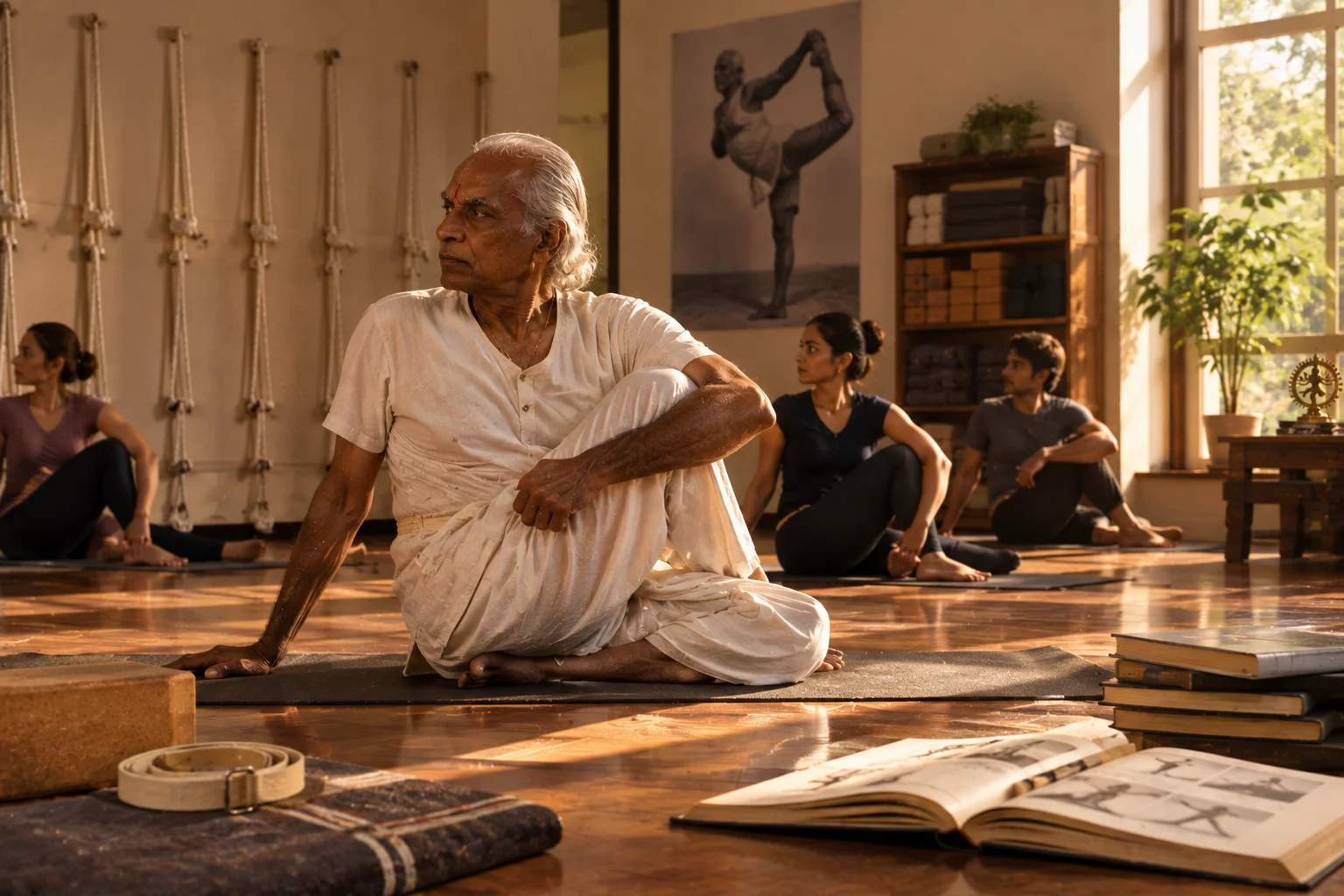
Light on Yoga, 1966: The Book That Standardised the Poses
Before 1966, if you wanted to know how a yoga posture should look, you asked a teacher. After 1966, you could check. Light on Yoga, by B. K. S. Iyengar, contains around two hundred asanas and roughly six hundred photographs, with the author demonstrating each one. Every posture is named, described in numbered steps, given…
-
·
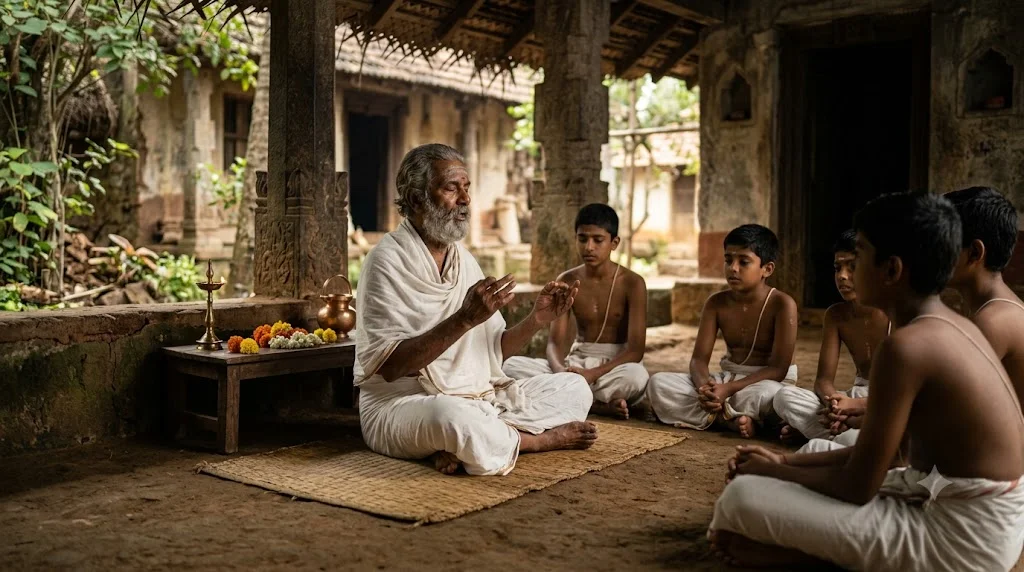
The Rig Veda: A Book That Was Not Written for Two Thousand Years
Here is the thing that stops people when they first hear it properly. The Rig Veda was composed somewhere around 1500 to 1200 BCE. The oldest manuscript of it that survives dates from roughly the eleventh century CE. That is a gap of well over two thousand years, and for almost all of it the…
-

·
The Teachers Who Made Modern Yoga
Almost every yoga class taught anywhere in the world today can be traced to one room in southern India. Between 1926 and 1946, Tirumalai Krishnamacharya taught in the Mysore Palace, under the patronage of the Maharaja Krishnaraja Wodeyar IV. Four of his students carried what they learned in different directions, and between them they built…
-

·
Swami Vivekananda: The Monk Who Changed Yoga
He was not on the programme. The World’s Parliament of Religions opened in Chicago on 11 September 1893, and the thirty-year-old Bengali monk who addressed it had arrived in America without an invitation, without proper credentials, and without money. He had slept in a railway freight car in Boston. He had been turned away when…
-

·
The History of Meditation: From the Vedas to the Clinic
Somebody sat down deliberately, closed their eyes, and tried to do nothing with their attention. We do not know who, or when, or where. Meditation leaves no artefacts. A pot survives. A wall survives. A person sitting quietly leaves nothing for an archaeologist to find, which means the history of meditation begins only when somebody…
-

·
The Vedas and the Earliest Roots of Yoga
For roughly three thousand years, the oldest sacred texts in India were not written down. They were held in people. Families of reciters memorised the Rigveda syllable by syllable, tone by tone, and passed it to their children using a set of verification techniques that border on the obsessive. In one method, jata-patha, the reciter…

Category: Yoga History
Yoga did not appear fully formed. This section follows it from the earliest hymns of the Vedas through the Upanishads, the Yoga Sutras and the Hatha texts, to the twentieth-century teachers who carried it out of India and into the modern gym.The interest here is in evidence rather than legend: which text says what, when it was written down, what it actually claimed, and how much of what is now taught as ancient is in fact recent. Where the record is thin or scholars disagree, the articles say so instead of choosing the tidier version.