-
·
What Is Samadhi? Yoga’s Highest State Explained
Patanjali names it in the second sentence of his text, then spends four chapters circling it without ever quite landing. Samadhi is the eighth and final limb of yoga. It is the state the whole system points toward. It is also the thing the tradition finds hardest to say anything useful about, and every classical…
-
·
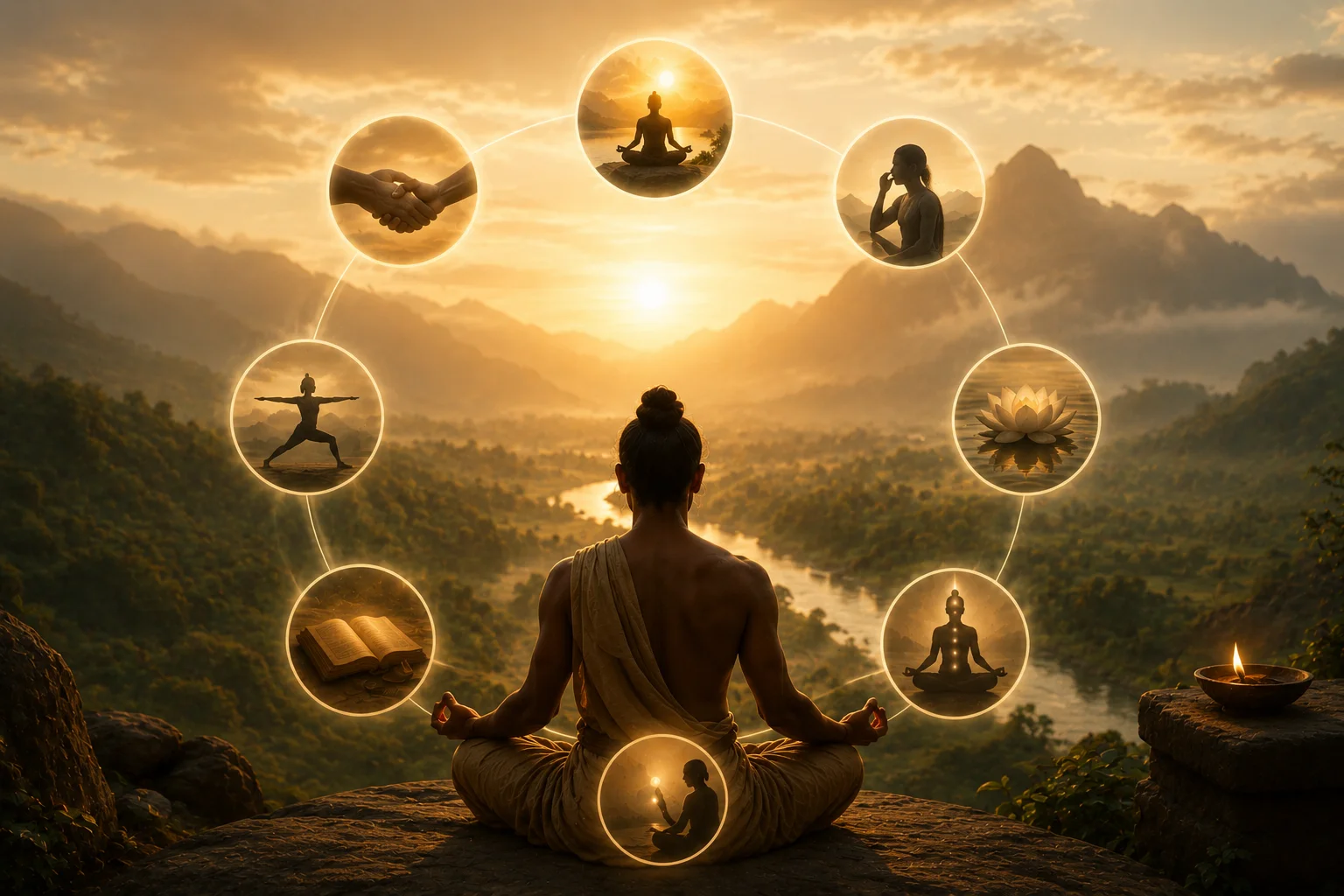
The Eight Limbs of Yoga Explained
Walk into most yoga studios and you will encounter the third limb. Only the third. The one about posture. It occupies the hour, the mat, the marketing, and for a great many practitioners it is the whole of what the word means. Patanjali gave it three sentences out of 196. The eight limbs, ashtanga, appear…
-

·
The Upanishads and the Birth of Yogic Philosophy
A boy named Nachiketa is given away by his father to Death. The father, Vajashravasa, has been performing a great sacrifice, giving away his possessions as the ritual requires. But the cattle he is offering are old and barren, animals that have already given everything they had. The boy notices. He asks his father, more…

Category: Yoga Philosophy
Philosophy is where yoga argues with itself. This section works through the ideas rather than the timeline: what the word yoga actually meant before it meant exercise, what the texts mean by liberation, what samadhi is supposed to be, and why three quite different paths, devotion, action and disciplined introspection, all claim to arrive at the same place.The articles stay close to what the sources say and name the text behind each claim. Where a modern reading has been read back into an old text, we point that out rather than passing it on.