
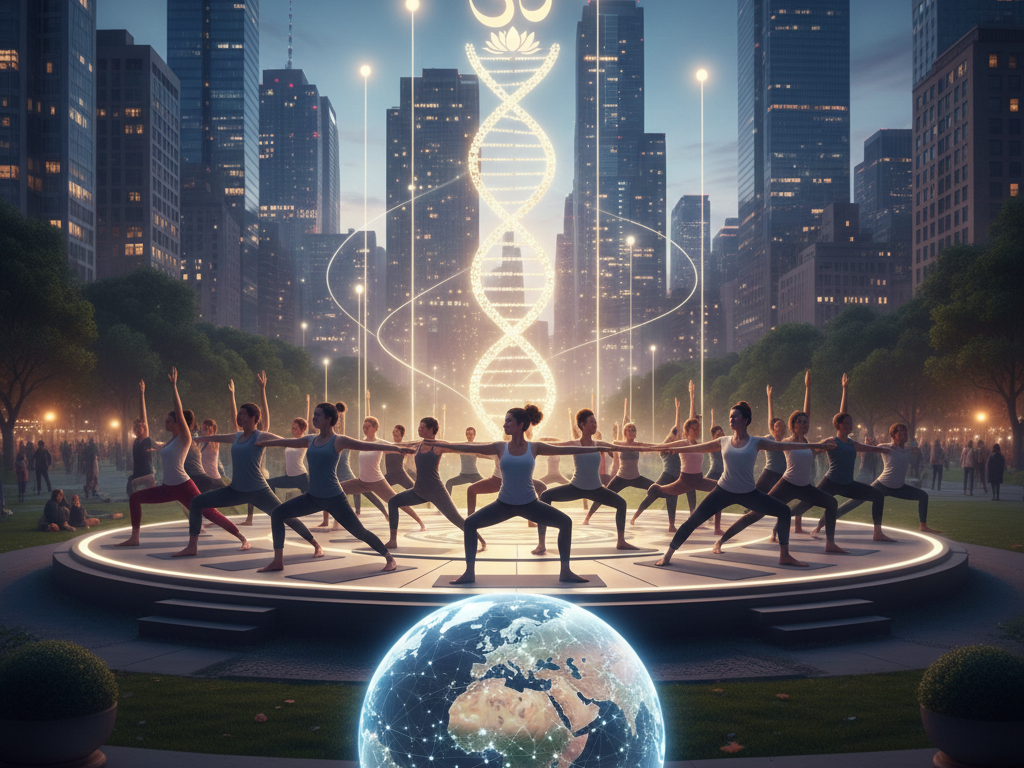
As Yoga entered the modern world, it did not arrive suddenly or dramatically. It arrived quietly, carried by teachers, thinkers, and practitioners who believed that this ancient Indian knowledge still had something valuable to offer humanity. The twentieth century became a bridge between the old and the new. Yoga stepped out of caves and ashrams and walked into classrooms, hospitals, research labs, and eventually, living rooms across the world.
For Indians, this phase of Yoga’s journey feels both proud and complicated. Proud because something born in this land found global respect. Complicated because in the process, Yoga was sometimes simplified, sometimes commercialized, and sometimes misunderstood.
Yet, even with all these changes, the core of Yoga survived.
Table of Contents
ToggleYoga Meets Modern Science
One of the biggest shifts in recent decades is the scientific study of Yoga. For a long time, Yoga was seen as belief based or spiritual. But modern research began asking practical questions. What happens to the brain during meditation. How does breath control affect the nervous system. Can Yoga reduce stress related diseases.
Studies from institutions like Harvard Medical School and the National Institutes of Health have shown that regular Yoga practice helps reduce anxiety, improves sleep quality, lowers blood pressure, and supports emotional regulation. Neuroscience research has found that meditation increases gray matter in areas of the brain related to memory, attention, and emotional balance.
For an Indian mind, this feels like science finally catching up with experience. Our ancestors may not have used modern instruments, but they observed the human mind with deep precision. What they described through awareness and discipline is now being confirmed through data and scans.
Yoga moved from belief to evidence.
A Global Practice with Indian Roots
Today, Yoga is practiced in almost every country. According to global wellness reports, hundreds of millions of people practice Yoga regularly. International Yoga Day, observed on June 21, is now recognized worldwide. Yoga studios exist in cities where people may not even know Sanskrit, yet they practice Surya Namaskar with sincerity.
This global acceptance shows the universality of Yoga. At the same time, it raises an important question. Can Yoga remain authentic when separated from its roots.
In India, Yoga was never just about the body. It was connected to ethics, discipline, and self inquiry. When Yoga is practiced without Yama and Niyama, without awareness and restraint, it risks becoming just another fitness routine.
Modern Yoga works best when it remembers where it came from.
Case Study: Yoga and Mental Health in Urban India
A practical example of Yoga’s relevance today can be seen in urban mental health programs in India. A 2022 study conducted in collaboration with government hospitals and wellness centers observed working professionals suffering from chronic stress, anxiety, and burnout.
Participants who followed a structured Yoga program for twelve weeks, including asana, pranayama, and meditation, showed significant improvement. Stress levels reduced. Sleep patterns improved. Emotional stability increased. Many participants reported better focus at work and improved relationships at home.
What is important here is not just the result, but the method. The program did not focus only on physical postures. It included breath awareness, guided meditation, and basic lifestyle discipline. This reflects traditional Yoga principles applied in a modern context.
Yoga proved that it is not outdated. It is adaptable.
Yoga as a Way of Living
In Indian culture, Yoga was never limited to one hour a day. It was a way of living. How you speak. How you eat. How you respond to success and failure. Yoga was present in all of it.
Modern life often pulls us in the opposite direction. Speed, comparison, constant stimulation. Yoga offers balance. It does not ask us to escape the world. It teaches us how to live in it without losing ourselves.
This is why Yoga continues to matter. Not because it is ancient, but because human problems remain the same. Stress. Fear. Attachment. Restlessness. Yoga addresses these at the root.
Responsibility of the Modern Practitioner
As Yoga becomes more popular, responsibility increases. Teachers, practitioners, and content creators must respect the depth of this tradition. Oversimplification may attract attention, but it weakens trust.
For websites, blogs, and platforms sharing Yoga related content, authenticity matters. Experience matters. Clear intention matters. This is not just important for search engines or ad approvals. It is important for preserving the dignity of the knowledge itself.
Yoga deserves honesty.
Closing Reflection
Yoga has walked a long journey. From ancient forests to modern cities. From silent meditation to scientific research. From Indian sages to global practitioners.
Yet, at its heart, Yoga remains the same. It is a method to understand the mind. To live with balance. To reduce suffering. To become more aware.
For us in India, Yoga is not a borrowed concept. It is a shared inheritance. When we practice it with respect and understanding, we honor not just our past, but our future.
Yoga is not finished evolving. It is still alive. And as long as humans continue to search for peace within chaos, Yoga will continue to guide the way.