
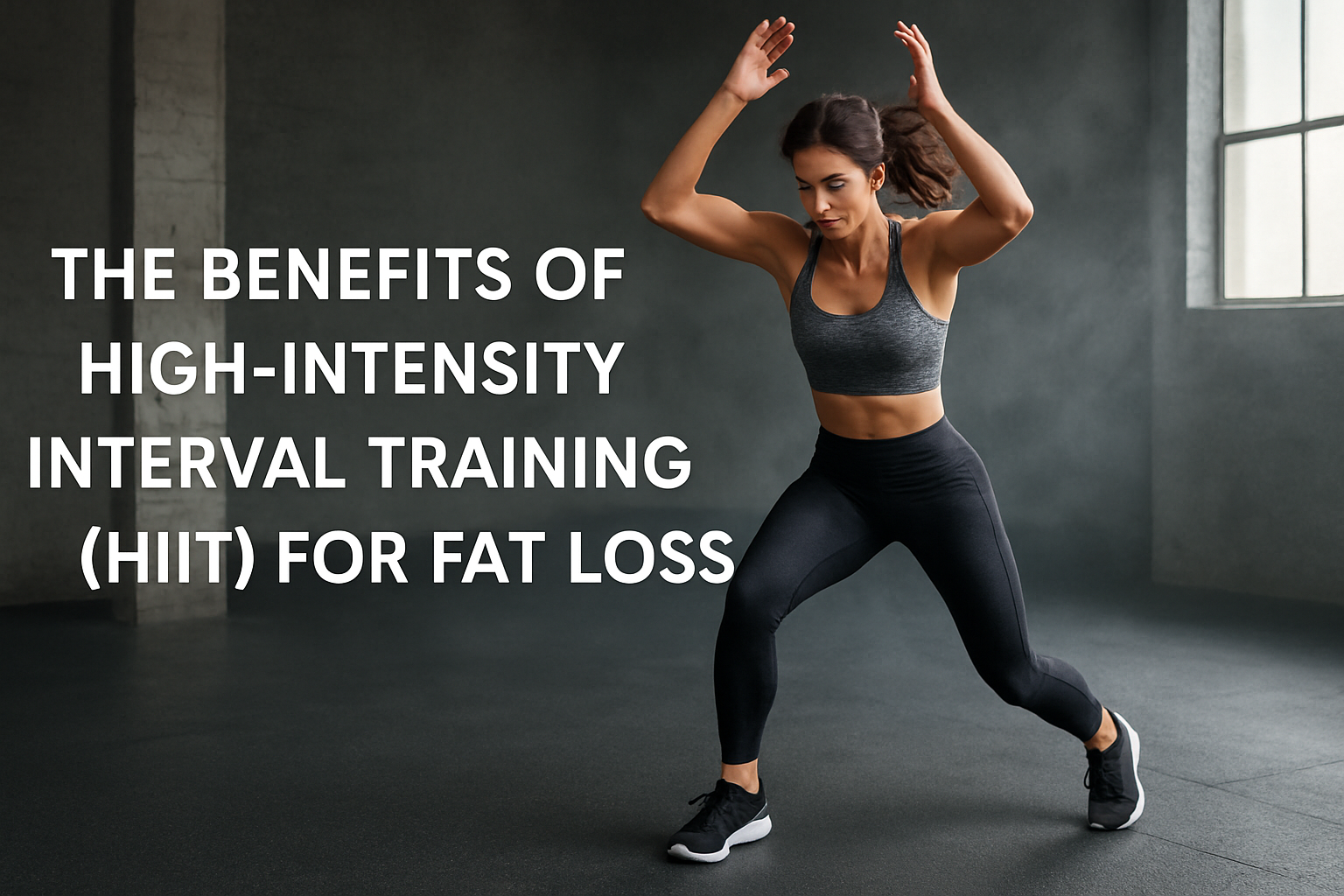
I’ll never forget the day I discovered High-Intensity Interval Training—or as most people call it, HIIT. I was stuck in a rut with my workouts, doing long cardio sessions that left me feeling exhausted but not really seeing the results I wanted. Then, I came across a short 20-minute HIIT workout on a fitness blog. It sounded intense, but I gave it a try. Let me tell you—by the end of it, I was drenched in sweat, breathing hard, and somehow feeling energized. That was my first clue that HIIT was something special.
If you’re looking to shed body fat, save time, and still get in a killer workout, HIIT might just be the answer. In this article, I’ll walk you through what makes HIIT so effective for fat loss, how it works, and how you can start incorporating it into your own routine—no gym required.
What is HIIT?
HIIT stands for High-Intensity Interval Training. It’s a training style that alternates between short, intense bursts of activity and brief periods of rest or lower-intensity exercise. For example, 30 seconds of sprinting followed by 30 seconds of walking, repeated for 15–20 minutes.
What’s awesome about HIIT is that it’s flexible. You can do it with bodyweight exercises, sprints, cycling, jump rope, or even swimming. The key is going all out during the work intervals.
How HIIT Helped Me with Fat Loss
I’ve found that high-intensity interval training (HIIT) can be a powerful tool for fat loss. In fact, several studies support this. One review, which looked at 13 studies involving 424 adults with overweight or obesity, found that both HIIT and traditional moderate-intensity exercise effectively reduced body fat and waist circumference.
What’s even more encouraging is that many other studies show HIIT can lead to fat loss even with a relatively short time commitment. For someone with a busy schedule, that’s a huge plus.
That said, like any form of exercise, HIIT tends to be especially effective for people who are overweight or obese. So while it’s not a magic fix, it can definitely be a valuable part of a fat-loss journey when combined with a balanced lifestyle.
Why HIIT is Effective for Fat Loss
When I switched to HIIT, one of the first things I noticed was how much more efficient my workouts became. Here’s why HIIT is so powerful for burning fat:
1. Burns More Calories in Less Time
Because of the intensity, HIIT burns a high number of calories in a short period. Studies have shown that HIIT can burn 25–30% more calories than other forms of exercise, like steady-state cardio.
2. Afterburn Effect (EPOC)
HIIT boosts your metabolism long after your workout is over through a process called Excess Post-exercise Oxygen Consumption (EPOC). This means you keep burning calories even when you’re done exercising. That’s like getting bonus fat-burning time while you’re resting!
3. Targets Stubborn Fat
HIIT has been shown to be particularly effective at reducing visceral fat—the dangerous fat stored around your organs. That’s the kind of fat we all want to get rid of.
4. Preserves Muscle Mass
Unlike long cardio sessions, HIIT helps retain lean muscle mass while targeting fat. For me, this meant I was getting leaner and stronger, without looking “skinny-fat.”
5. Time-Efficient
One of the best parts? You can get amazing results in just 20–30 minutes. This was a game-changer for me because I didn’t have hours to spend at the gym. Even on my busiest days, I could squeeze in a HIIT session.
A Sample HIIT Workout for Fat Loss
Here’s a simple bodyweight HIIT routine I started with. No equipment needed, just your determination.
Perform each exercise for 40 seconds, rest for 20 seconds between moves. Complete the circuit 3–4 times.
- Jump Squats
- Push-Ups
- Mountain Climbers
- Jump Lunges
- Plank to Push-Up
You’ll be winded by the end, but in the best way. Feel free to adjust the work/rest ratio depending on your fitness level.
Tips for Success with HIIT
1. Warm Up First
Always take 5 minutes to warm up—jumping jacks, high knees, arm circles. Your body needs it to prevent injury and perform at its best.
2. Focus on Form
Go hard, but never sacrifice form. It’s better to slow down than risk injury.
3. Stay Consistent
Start with 2–3 sessions per week and build up. Your body needs recovery time, so don’t overdo it.
4. Pair with a Good Diet
No amount of HIIT can outwork a poor diet. Focus on whole foods, lean proteins, and healthy fats.
Final Thoughts
HIIT changed how I viewed fitness. It helped me break through plateaus, drop stubborn fat, and actually enjoy my workouts again. If you’re tired of long, boring cardio and want to feel the burn in less time, give HIIT a shot.
Remember—it’s not about how long you train, but how hard you train. A few minutes of all-out effort can be more powerful than an hour of half-hearted movement.
So if you’re ready to torch fat, save time, and feel strong, HIIT might just be your new best friend. Trust me—it works.
This guide is for educational and informational purposes only and is not a substitute for professional medical or health advice, examination, diagnosis, or treatment. Always seek the advice of a qualified healthcare professional, such as your physician or a physical therapist, before starting any new fitness program or making changes to your current routine. If you experience any sharp or persistent pain, stop exercising immediately and consult a medical professional. The author and publisher are not responsible for any injuries or health issues that may result from following the advice provided in this guide.