
March 2, 2026 | joyaditya49@gmail.com

Yama: The Ethical Foundation of Classical Yoga
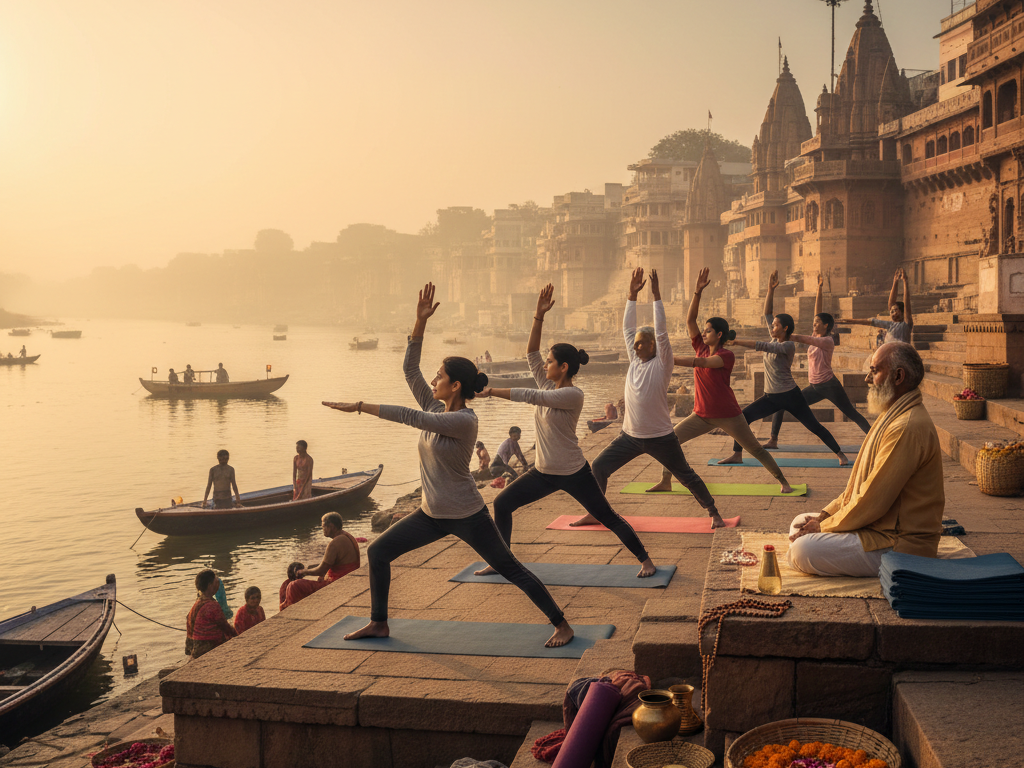
When we study the history of Yoga, especially through the lens of the Yoga Sutras, one thing becomes very clear. Yoga was never designed to begin with the body. It began with character. It began with discipline of behavior. It began with Yama.

In the classical system of Ashtanga Yoga described by the sage Patanjali around the early centuries BCE or CE, Yama is the very first limb. Before posture. Before breath control. Before meditation. This historical order itself tells us something important. In ancient Indian thought, inner clarity could not be achieved without ethical stability.

Yama can be understood as universal moral restraints. These were not rules imposed by society. They were disciplines meant to purify the practitioner’s relationship with the world. The early yogic tradition believed that a disturbed social life creates a disturbed mind. And a disturbed mind cannot meditate deeply.

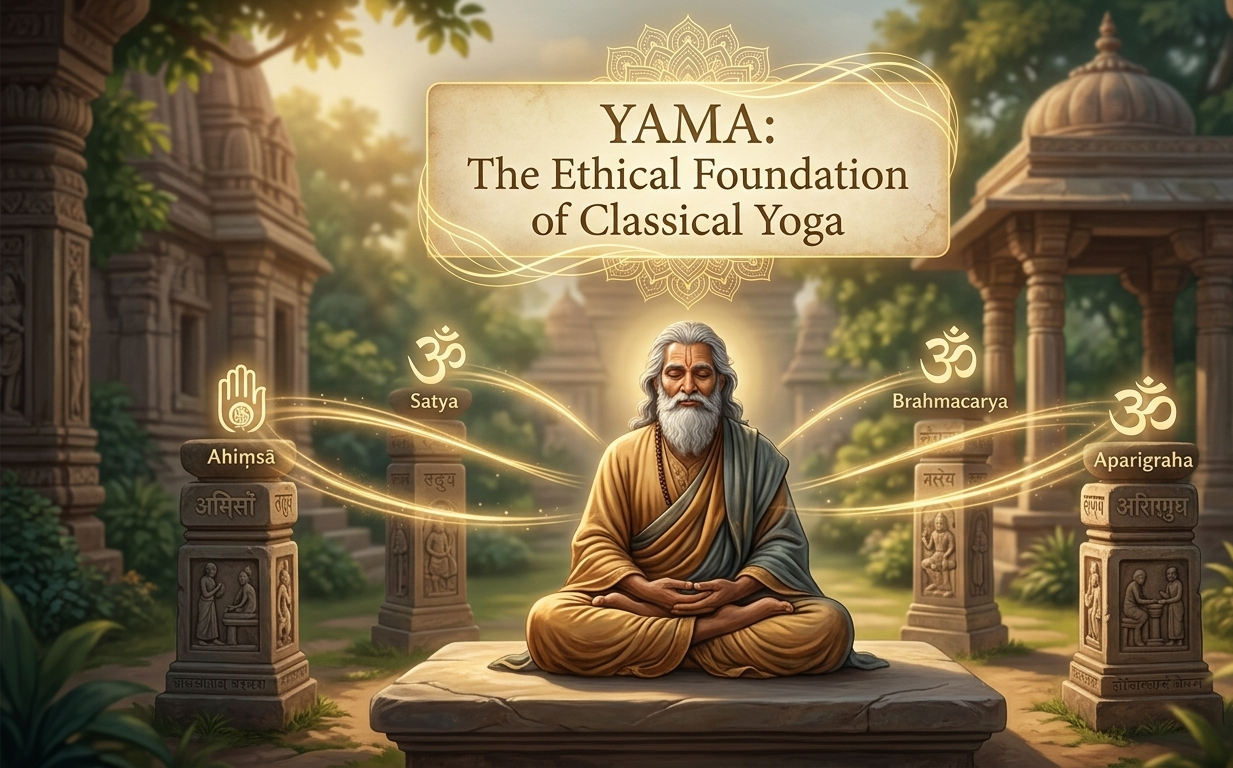
There are five Yamas described in the Yoga Sutras.

1. Ahimsa: Non Violence

Ahimsa is often translated as non violence, but historically its meaning was much deeper than simply avoiding physical harm. In ancient Indian philosophy, violence included harsh speech, harmful thoughts, and exploitation.

Ahimsa required the yogi to cultivate gentleness in action and intention. It reflected a broader cultural idea present in Indian traditions, including Jainism and Buddhism, where non violence became a central principle of life.

The historical significance of Ahimsa is immense. It shaped not only spiritual practice but also social ethics across centuries.

2. Satya: Truthfulness

Satya means truthfulness. But again, this was not limited to speaking facts. In classical Yoga, Satya meant alignment between thought, speech, and action. It meant living in authenticity.

Ancient Indian philosophers believed that truth was not merely moral. It was ontological. Truth reflected reality itself. Therefore, speaking falsehood was seen as distancing oneself from reality.

Within yogic history, Satya reinforced clarity of mind. A person who deceives others ultimately deceives themselves, and such confusion obstructs meditation.

3. Asteya: Non Stealing

Asteya means non stealing. Historically, this extended beyond material theft. It included taking credit that does not belong to you, exploiting others’ time, or desiring what is not rightfully yours.

In ancient India, where ascetic communities depended on public trust, Asteya was essential. A yogi who violated trust weakened not only personal practice but the entire spiritual order.

Asteya encouraged contentment and discipline. It restrained greed, which was seen as a major cause of mental agitation.

4. Brahmacharya: Moderation of Energy

Brahmacharya is often misunderstood. While it is sometimes translated as celibacy, its original meaning was broader. It referred to the wise use of vital energy.

In the historical context of Yoga, Brahmacharya meant self control in all pleasures, not only sexual restraint. It encouraged balance rather than suppression. The belief was that scattered energy weakens concentration, while conserved energy strengthens awareness.

Many ascetic traditions in India emphasized Brahmacharya as essential for deep meditation.

5. Aparigraha: Non Possessiveness

Aparigraha means non hoarding or non possessiveness. Ancient yogis observed that attachment to possessions creates fear of loss. Fear disturbs the mind.

In a historical context where renunciation was common among seekers, Aparigraha supported simplicity. The less one accumulated, the freer one felt.

This principle also reflected a broader Indian cultural respect for minimalism and detachment.

Historical Importance of Yama

Yama was not optional in classical Yoga. It was foundational. Patanjali even described these restraints as universal vows, applicable regardless of time, place, or social status.

This universality shows that early Yoga was not only a spiritual path but also a social philosophy. It aimed to harmonize individual conduct with collective well being.

Without Yama, later limbs such as concentration and meditation were considered unstable. Ethical confusion would disturb mental clarity.

Historically, Yama connects Yoga to the larger moral frameworks of Indian civilization. It reveals that Yoga was never just physical discipline. It was a comprehensive approach to living responsibly and consciously.

Understanding Yama helps us see that the roots of Yoga lie not in flexibility, but in integrity

Also Read: The Late Medieval Period: Decline, Preservation, and the Quiet Guardians of Yoga

Share: Facebook Twitter Linkedin
Yoga
January 30, 2026 | joyaditya49@gmail.com

The Global Expansion of Yoga: Transformation, Interpretation, and Historical Consequences

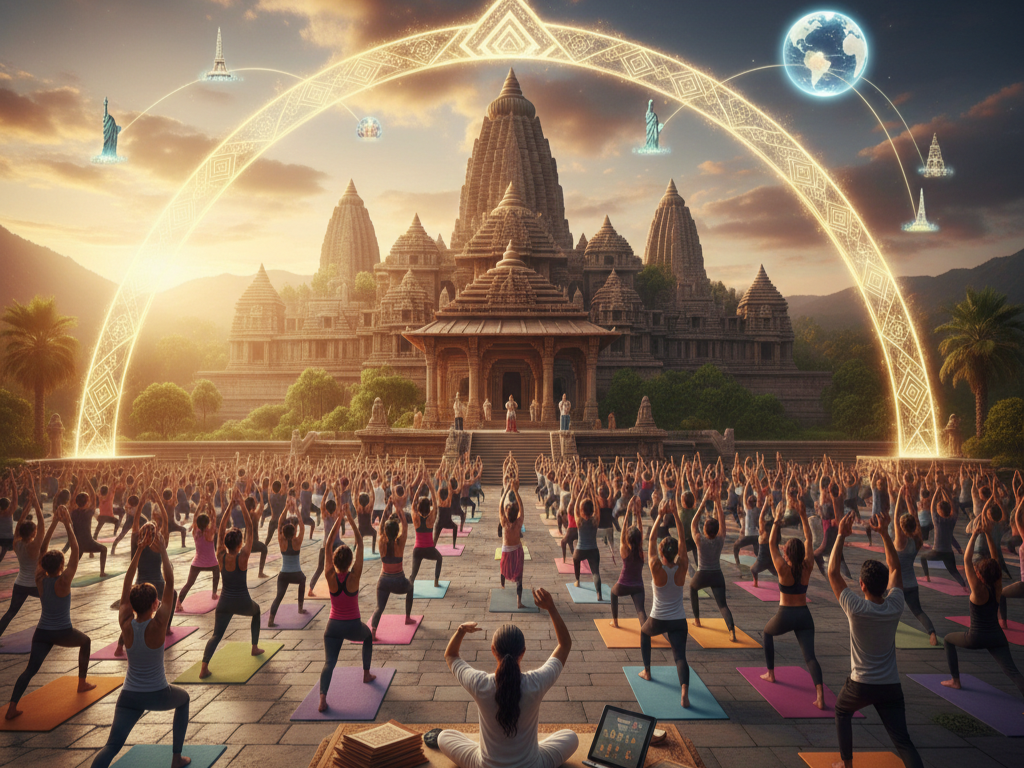
As the twentieth century progressed, Yoga entered a phase unlike anything it had experienced before. For the first time in its long history, Yoga was no longer confined to a specific geography, language, or culture. What began in the forests and philosophical schools of ancient India now moved across continents, shaped by new social conditions, new audiences, and new interpretations.

This phase was not sudden. It unfolded gradually, influenced by historical forces such as globalization, migration, print culture, and the growing exchange of ideas between East and West. Yoga did not simply spread. It transformed.

From Spiritual Discipline to Structured System

In earlier centuries, Yoga was primarily transmitted through personal instruction. The teacher student relationship was central. But as Yoga reached international audiences, this method had to change. Large groups, public demonstrations, and written manuals became necessary.

During the early to mid twentieth century, Yoga was increasingly systematized. Sequences of postures were organized. Breathing techniques were classified. Practices that had once varied by lineage were standardized so they could be taught consistently.

This was a historical shift. Yoga moved from an individualized tradition to a structured system. While this made Yoga accessible to many more people, it also changed its character. The subtle philosophical and ethical foundations were often simplified so that the physical aspects could be more easily understood.

This transformation was not accidental. It was a response to a new world that valued structure, clarity, and repeatability.

Yoga and the Rise of Physical Culture

The global spread of Yoga coincided with the rise of physical culture movements around the world. In Europe and America, there was growing interest in health, posture, strength, and longevity. Yoga was often introduced within this context.

As a result, physical postures gained greater prominence. Asana based Yoga became the most visible form of the tradition. This emphasis marked a clear departure from earlier periods, where postures were supportive tools rather than central goals.

Historically, this moment represents a rebalancing. What had once been inward focused now appeared outwardly visible. Yoga adapted to the expectations of modern society, which often sought measurable benefits rather than philosophical depth.

This adaptation ensured survival, but it also reshaped perception.

Interpretation and Cultural Translation

As Yoga crossed cultural boundaries, it underwent interpretation. Sanskrit terms were translated. Concepts were explained using modern psychology, anatomy, and science. In many cases, this helped Yoga gain legitimacy in academic and medical circles.

However, translation always involves selection. Certain ideas were emphasized, while others were set aside. Ethical disciplines, metaphysical discussions, and spiritual goals were sometimes minimized in favor of practices that could be easily understood and adopted.

This process of cultural translation is an important historical phenomenon. Yoga was no longer practiced only within its original philosophical framework. It began to exist in multiple forms, shaped by the values of different societies.

Yet, even in altered form, the core principles of awareness, discipline, and balance remained present.

Institutionalization and Mass Teaching

Another significant development of this period was the institutionalization of Yoga. Training programs, certification systems, and formal organizations emerged. Yoga entered universities, research institutions, and public health discussions.

This marked a departure from Yoga’s earlier dependence on lineage based authority. Knowledge was now validated through institutions rather than ancestry. This change reflected broader historical trends in education and governance.

While some traditionalists viewed this with concern, institutionalization also protected Yoga from disappearance. It ensured continuity in a rapidly changing world.

Yoga became part of documented history rather than fragile memory.

Consequences of Global Visibility

Global visibility brought both recognition and tension. Yoga gained respect as a discipline of mind and body, but it also faced oversimplification. In some contexts, Yoga was separated entirely from its Indian origins, presented as a universal technique without history.

From a historical perspective, this raises important questions about ownership, interpretation, and preservation. Yoga’s expansion made it global, but it also challenged the connection between practice and origin.

History shows that such transformations are not unique. Knowledge systems often change when they cross cultures. Yoga’s ability to adapt is part of what allowed it to survive.

A Tradition at a Turning Point

By the late twentieth century, Yoga stood at another turning point in its long journey. It had moved from secrecy to visibility, from lineage to institution, from philosophy to practice oriented systems.

This stage did not erase Yoga’s past. It layered new meanings upon it.

What remained unchanged was Yoga’s core purpose. To explore the relationship between body, mind, and awareness. To reduce suffering through discipline and insight. To offer a path toward inner clarity.

As history shows, Yoga has never been static. It has evolved with time, responding to the needs and conditions of each era.

And as it entered the final years of the twentieth century, Yoga carried with it the weight of centuries. Ancient in origin. Transformed by history. And firmly embedded in the global story of human inquiry.
Share: Facebook Twitter Linkedin
Yoga
January 30, 2026 | joyaditya49@gmail.com

The Revival of Yoga: Rediscovery, Reform, and the Threshold of a Global Journey
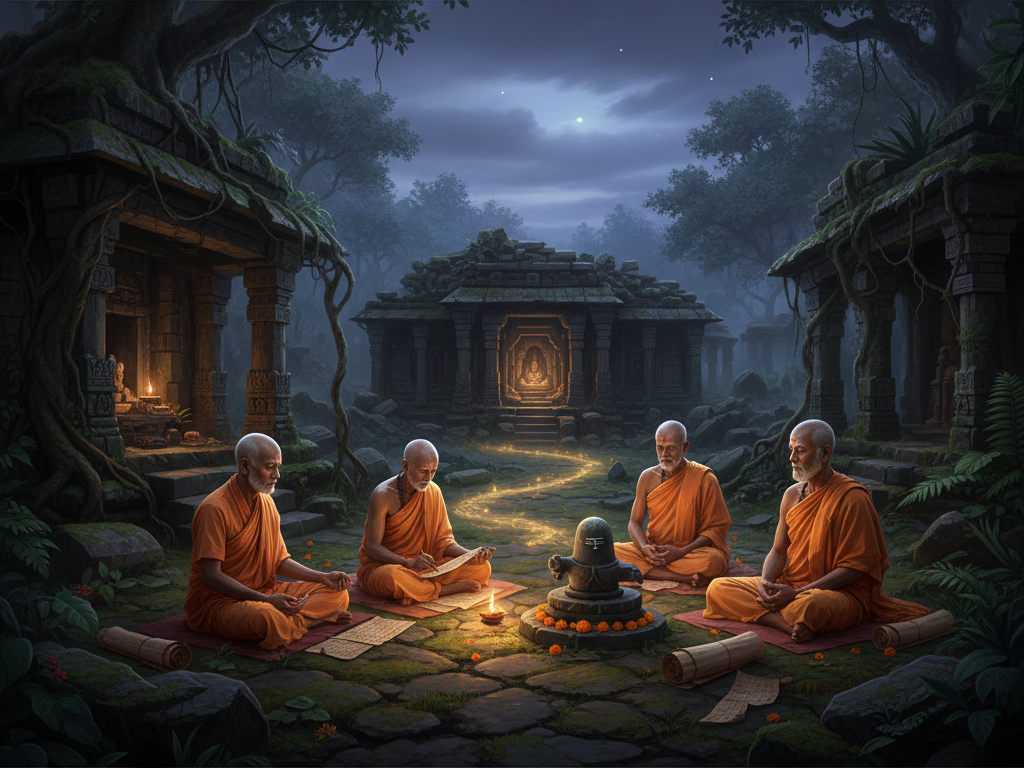
By the late nineteenth century, Yoga stood at a delicate moment in its long history. It had survived thousands of years, but it was no longer widely understood, even in its own land. For many Indians living under colonial rule, Yoga appeared distant and fragmented. Some associated it only with extreme ascetics, others with ritual practices stripped of their original philosophical depth. The everyday connection between Yoga and Indian intellectual life had weakened.

At the same time, India itself was undergoing a deep transformation. Western education systems were reshaping how knowledge was valued. Ancient Indian traditions were often labeled unscientific or obsolete. Sanskrit learning declined, and with it, direct access to classical yogic texts. Yoga did not disappear, but it existed in pockets, practiced by monks, householders, and small lineages rather than the broader society.

Yet this period of uncertainty also became the ground for revival.

A Cultural Awakening and Return to the Texts

The late nineteenth century saw the rise of Indian thinkers who began questioning the dismissal of their own heritage. They asked an important question. If India had produced such vast philosophical systems in the past, why should those systems be ignored now.

This questioning led to a renewed study of ancient texts. The Upanishads, the Yoga Sutras, and classical Hatha Yoga manuals were revisited with fresh eyes. Yoga was no longer approached only as religious belief, but as a disciplined method of understanding the mind, behavior, and human suffering.

This shift was crucial. Yoga was reframed as a system of self development rather than superstition. Concepts like concentration, restraint, breath control, and meditation were explained in clear, rational language. This made Yoga accessible to Indians educated in modern institutions, many of whom had grown distant from traditional learning.

Yoga began to find its voice again.

Public Teaching and the End of Secrecy

For centuries, Yoga had survived through secrecy and selective transmission. In the revival period, this changed. Teachers began to share yogic knowledge openly. Ashrams and learning centers emerged where Yoga was taught systematically rather than privately.

Texts were printed and distributed. Commentaries were written to explain difficult ideas in simpler terms. Yoga was no longer confined to forests or isolated monasteries. It entered towns, cities, and educational spaces.

This openness marked a major historical shift. Knowledge that had once been protected through silence was now preserved through documentation. This reduced the risk of loss and allowed Yoga to reach a wider audience than ever before.

Different interpretations developed during this time. Some schools emphasized discipline of the body. Others focused on meditation and philosophy. Rather than weakening Yoga, this diversity reflected its long evolutionary history.

Yoga Beyond India’s Borders

Another defining moment of this period was Yoga’s movement beyond India. Indian teachers presented Yoga to audiences outside the subcontinent, especially in Europe and America. What they presented was not ritual or cultural symbolism, but a universal philosophy of self control, awareness, and inner balance.

This exposure introduced Yoga to philosophers, scholars, and spiritual seekers who were dissatisfied with purely material explanations of life. Yoga was discussed alongside psychology, ethics, and philosophy. It was studied, debated, and admired.

Interestingly, this global interest also influenced how Yoga was viewed within India. When Indians saw their own tradition respected internationally, it encouraged renewed confidence and curiosity. Yoga began to reclaim its place as a source of intellectual and spiritual pride.

Yoga and the National Consciousness

As India moved closer to independence, Yoga became more than a personal discipline. It became a cultural symbol. In a time marked by political struggle and social change, Yoga represented inner strength, self discipline, and continuity with the past.

It reminded people that Indian civilization was not defined only by external power, but by inner inquiry. Yoga reinforced the idea that freedom was not merely political. It was also psychological and ethical.

This connection between Yoga and national identity helped ensure its survival during a time of transition. Yoga was no longer invisible. It was recognized as part of India’s living heritage.

Standing at the Edge of a New Chapter

By the mid twentieth century, Yoga had completed a full historical cycle. It had emerged in ancient times as a path of liberation. It had evolved through philosophy, Tantra, and physical discipline. It had endured destruction, neglect, and silence. And now, it stood renewed.

Yoga was no longer hidden. It was no longer fragmented. It was ready to enter a new phase of history, one in which it would become widely visible and globally practiced.

This moment was not the end of Yoga’s journey. It was a threshold. Everything that followed was built upon this revival.

Yoga had survived because it addressed something timeless. The human search for clarity, balance, and freedom. And as history shows, any knowledge rooted in that search never truly disappears.

Share: Facebook Twitter Linkedin
Guardians of Yoga
January 30, 2026 | joyaditya49@gmail.com

The Late Medieval Period: Decline, Preservation, and the Quiet Guardians of Yoga

As centuries passed, India went through major political and social upheavals. Kingdoms rose and fell. Trade routes shifted. New belief systems arrived. With these changes, many ancient institutions that once supported yogic learning began to weaken. Large gurukuls declined. Royal patronage disappeared in many regions. Sacred spaces were damaged or abandoned.

This period is often described as a decline, but that would be an incomplete truth. Yoga did not disappear. It simply changed the way it survived.

Earlier, Yoga flourished openly in forests, monasteries, and temples. In the late medieval period, it became quieter. More personal. More hidden. Knowledge moved from public spaces into the hands of individual yogis, household practitioners, and small sects.

In the Indian tradition, when something becomes fragile, it does not fight loudly. It protects itself silently. Yoga did the same.

Yogis as Wanderers and Keepers of Knowledge

During this time, many yogis became wandering ascetics. They moved from village to village, forest to forest, carrying knowledge not in books, but in memory and practice. They taught selectively. Often only to those who showed discipline and sincerity.

This method protected Yoga. Written texts can be destroyed. Living knowledge is harder to erase.

Many yogic practices survived through oral transmission. Short verses. Symbols. Simple techniques that carried deep meaning. What could not be explained openly was encoded in poetry, ritual, and metaphor.

This is why many yogic texts from this period appear symbolic or cryptic. They were meant to be understood only by those already walking the path.

Regional Traditions and Folk Yoga

Another important development during this time was the spread of yogic ideas into regional and folk traditions. Yoga was no longer limited to Sanskrit scholars. It entered local languages, songs, and practices.

In villages, Yoga blended with daily life. Breath control, fasting, discipline, silence, and meditation became part of religious observance and seasonal rituals. Saints and mystics spoke in simple language so common people could understand deeper truths.

This period gave rise to a more accessible spirituality. Yoga moved closer to the masses, not through institutions, but through lived example.

This is why many Indian families, even today, carry small yogic habits without calling them Yoga. Silence during prayer. Controlled breathing. Early rising. Simple living. These are echoes of that era.

Preservation Through Texts and Lineages

Although much knowledge was transmitted orally, some important texts were preserved during this time. Works related to Hatha Yoga, Tantra, and meditation were copied, commented upon, and safeguarded by small communities.

Lineages became extremely important. A teacher was not just an instructor, but a guardian of tradition. Knowledge was passed carefully, often with strict discipline. This ensured purity of practice, even if the number of practitioners remained small.

This period taught Yoga resilience. It survived not through expansion, but through depth.

The Threshold Before the Modern Age

By the time India approached the early modern period, Yoga existed in fragments. Different schools. Different interpretations. Some focused on the body. Some on devotion. Some on meditation. But the core remained intact.

Yoga had not vanished. It had rested.

Waiting for a time when it could rise again, not as a secret tradition, but as shared knowledge.

That moment would come later, when Indian thinkers began to re examine their own heritage and present Yoga once again to the world.

Why This Phase Matters

This chapter of Yoga’s history is important because it reminds us of something deeply Indian. True knowledge does not need constant visibility. It survives through sincerity.

Yoga lived because someone practiced it quietly. Someone taught it honestly. Someone protected it without recognition.

That is how Yoga crossed centuries of uncertainty.

Not loudly.
Not forcefully.
But steadily.

Share: Facebook Twitter Linkedin
Yoga in the Modern World
January 30, 2026 | joyaditya49@gmail.com

Yoga in the Modern World: Science, Global Reach, and a Living Indian Legacy

As Yoga entered the modern world, it did not arrive suddenly or dramatically. It arrived quietly, carried by teachers, thinkers, and practitioners who believed that this ancient Indian knowledge still had something valuable to offer humanity. The twentieth century became a bridge between the old and the new. Yoga stepped out of caves and ashrams and walked into classrooms, hospitals, research labs, and eventually, living rooms across the world.

For Indians, this phase of Yoga’s journey feels both proud and complicated. Proud because something born in this land found global respect. Complicated because in the process, Yoga was sometimes simplified, sometimes commercialized, and sometimes misunderstood.

Yet, even with all these changes, the core of Yoga survived.

Yoga Meets Modern Science

One of the biggest shifts in recent decades is the scientific study of Yoga. For a long time, Yoga was seen as belief based or spiritual. But modern research began asking practical questions. What happens to the brain during meditation. How does breath control affect the nervous system. Can Yoga reduce stress related diseases.

Studies from institutions like Harvard Medical School and the National Institutes of Health have shown that regular Yoga practice helps reduce anxiety, improves sleep quality, lowers blood pressure, and supports emotional regulation. Neuroscience research has found that meditation increases gray matter in areas of the brain related to memory, attention, and emotional balance.

For an Indian mind, this feels like science finally catching up with experience. Our ancestors may not have used modern instruments, but they observed the human mind with deep precision. What they described through awareness and discipline is now being confirmed through data and scans.

Yoga moved from belief to evidence.

A Global Practice with Indian Roots

Today, Yoga is practiced in almost every country. According to global wellness reports, hundreds of millions of people practice Yoga regularly. International Yoga Day, observed on June 21, is now recognized worldwide. Yoga studios exist in cities where people may not even know Sanskrit, yet they practice Surya Namaskar with sincerity.

This global acceptance shows the universality of Yoga. At the same time, it raises an important question. Can Yoga remain authentic when separated from its roots.

In India, Yoga was never just about the body. It was connected to ethics, discipline, and self inquiry. When Yoga is practiced without Yama and Niyama, without awareness and restraint, it risks becoming just another fitness routine.

Modern Yoga works best when it remembers where it came from.

Case Study: Yoga and Mental Health in Urban India

A practical example of Yoga’s relevance today can be seen in urban mental health programs in India. A 2022 study conducted in collaboration with government hospitals and wellness centers observed working professionals suffering from chronic stress, anxiety, and burnout.

Participants who followed a structured Yoga program for twelve weeks, including asana, pranayama, and meditation, showed significant improvement. Stress levels reduced. Sleep patterns improved. Emotional stability increased. Many participants reported better focus at work and improved relationships at home.

What is important here is not just the result, but the method. The program did not focus only on physical postures. It included breath awareness, guided meditation, and basic lifestyle discipline. This reflects traditional Yoga principles applied in a modern context.

Yoga proved that it is not outdated. It is adaptable.

Yoga as a Way of Living

In Indian culture, Yoga was never limited to one hour a day. It was a way of living. How you speak. How you eat. How you respond to success and failure. Yoga was present in all of it.

Modern life often pulls us in the opposite direction. Speed, comparison, constant stimulation. Yoga offers balance. It does not ask us to escape the world. It teaches us how to live in it without losing ourselves.

This is why Yoga continues to matter. Not because it is ancient, but because human problems remain the same. Stress. Fear. Attachment. Restlessness. Yoga addresses these at the root.

Responsibility of the Modern Practitioner

As Yoga becomes more popular, responsibility increases. Teachers, practitioners, and content creators must respect the depth of this tradition. Oversimplification may attract attention, but it weakens trust.

For websites, blogs, and platforms sharing Yoga related content, authenticity matters. Experience matters. Clear intention matters. This is not just important for search engines or ad approvals. It is important for preserving the dignity of the knowledge itself.

Yoga deserves honesty.

Closing Reflection

Yoga has walked a long journey. From ancient forests to modern cities. From silent meditation to scientific research. From Indian sages to global practitioners.

Yet, at its heart, Yoga remains the same. It is a method to understand the mind. To live with balance. To reduce suffering. To become more aware.

For us in India, Yoga is not a borrowed concept. It is a shared inheritance. When we practice it with respect and understanding, we honor not just our past, but our future.

Yoga is not finished evolving. It is still alive. And as long as humans continue to search for peace within chaos, Yoga will continue to guide the way.

Share: Facebook Twitter Linkedin
Yoga
January 30, 2026 | joyaditya49@gmail.com

Survival, Sacred Sites, and the Hidden Journey of Yoga Through Time
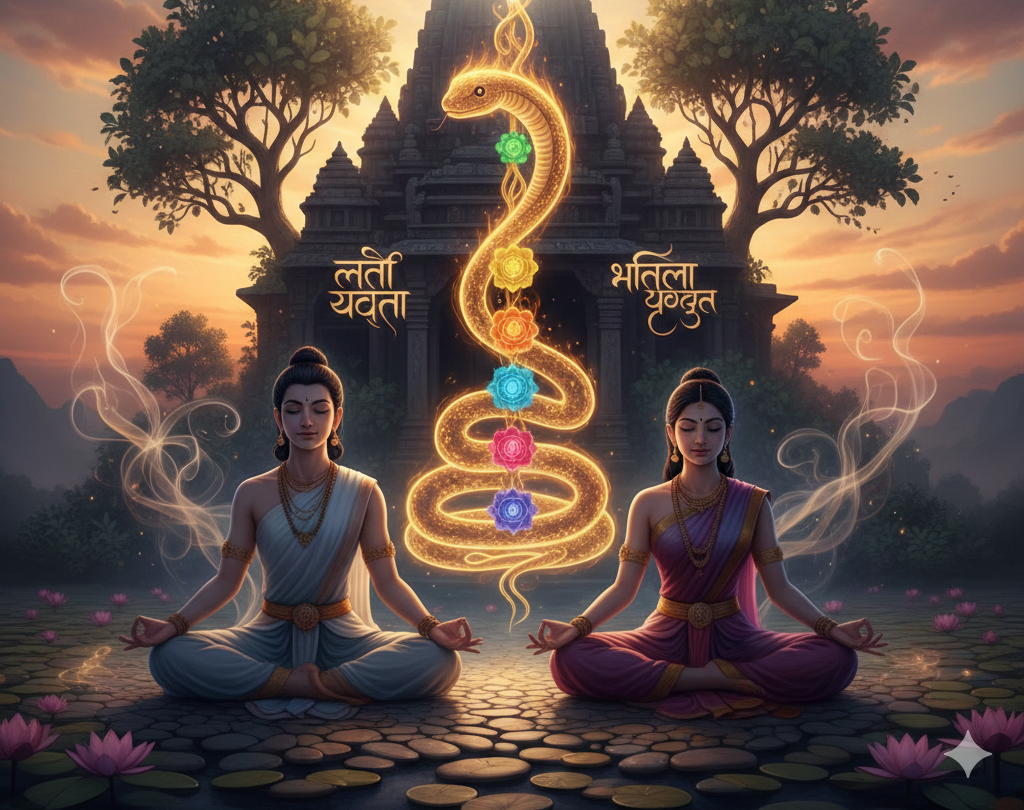
When we look at Yoga today, it feels timeless and untouched. But the truth is, Yoga has survived centuries of change, conflict, and loss. It did not travel in a straight line from the ancient forests to modern studios. It walked a difficult path, sometimes openly, sometimes quietly, often protected by a few dedicated seekers who refused to let it disappear.

In India, knowledge was traditionally passed from teacher to student through direct experience. Yoga was rarely written down in detail. It was lived, practiced, and transmitted through memory and discipline. This made Yoga powerful, but also vulnerable. When social and political structures changed, much of this knowledge risked being lost.

Yet Yoga survived. And it survived because it adapted.

Yoga in Temples, Caves, and Sacred Spaces

For centuries, Yoga was preserved in temples, caves, forests, and remote monasteries. These were not just places of worship. They were centers of learning and inner exploration. If you visit ancient temple complexes in India, you will notice something interesting. The walls are not only filled with gods and stories. They are filled with yogic postures, meditative figures, and symbolic representations of inner states.

Yogini temples, which existed across central and eastern India, were dedicated to powerful feminine energies. These sites combined Tantra, Yoga, and ritual practice. Many of these temples were later destroyed or abandoned, but their influence remained in oral traditions and local practices.

Caves like those in Ellora and Elephanta were not chosen randomly. They were spaces of silence and stability, perfect for meditation. These locations remind us that Yoga was not meant for performance. It was meant for transformation.

For an Indian, this connection between geography and spirituality feels natural. Rivers, mountains, forests, and caves have always been part of our sacred imagination.

Challenges and Disruptions

As India went through invasions, cultural shifts, and political changes, many traditional systems of learning were disrupted. Large institutions collapsed. Temples were destroyed or repurposed. Gurukuls declined. Yoga, which depended heavily on these systems, moved into the shadows.

But Yoga did not vanish. It went underground.

Yogis became wanderers. Knowledge moved quietly from one generation to another. Practices were simplified. Symbols replaced long explanations. What could not be spoken openly was preserved in stories, songs, and coded rituals.

This period is often overlooked in history books, but it is one of the reasons Yoga still exists today. Survival required flexibility. And Yoga, by its very nature, was adaptable.

Bhakti Movement and Inner Yoga

During the medieval period, the Bhakti movement played a significant role in keeping yogic ideas alive. Saints like Kabir, Mirabai, and others spoke about devotion, inner purity, and surrender. While they did not always use the language of classical Yoga, the essence was the same.

They spoke about controlling desire, observing the mind, dissolving ego, and experiencing unity. Yoga moved from physical discipline to emotional and devotional depth.

This made spiritual practice accessible to ordinary people. You did not need to sit in a cave or master complex techniques. You could live Yoga through love, service, and awareness.

This is again a very Indian quality. Spirituality that meets people where they are.

The Colonial Period and Rediscovery of Yoga

When India came under British rule, many traditional practices were dismissed as superstition. Yoga was often misunderstood or ignored. At the same time, something unexpected happened. Indian thinkers began to look back at their own heritage with fresh eyes.

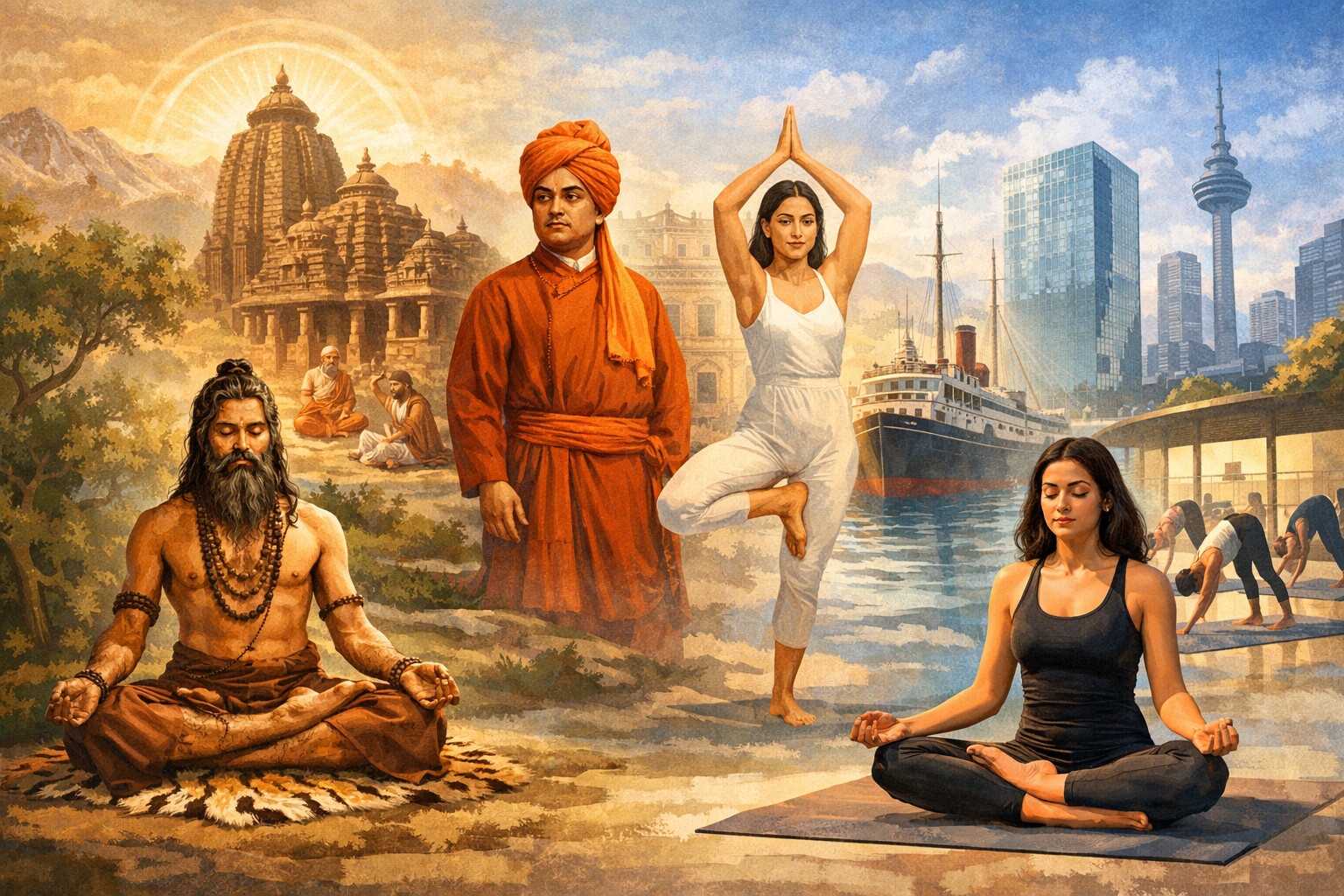
Figures like Swami Vivekananda presented Yoga to the world not as ritual or mysticism, but as a rational and scientific system of self-development. Yoga gained global attention, especially in the West, through lectures, writings, and cultural exchange.

This period marked a turning point. Yoga moved from secrecy to global curiosity.

Yoga in the Modern World

In the twentieth and twenty-first centuries, Yoga transformed again. It entered schools, hospitals, research centers, and homes. Scientific studies began validating its benefits for mental health, stress reduction, flexibility, and emotional balance.

Today, according to global health studies, millions of people practice Yoga regularly. It is recommended for anxiety, depression, chronic pain, and lifestyle disorders. Yoga is no longer seen only as spiritual practice. It is recognized as a holistic health system.

Yet, this modern success comes with responsibility. When Yoga is separated from its ethical and philosophical roots, it risks becoming shallow. The ancient masters always emphasized balance. Body, breath, mind, and values must move together.

Why This History Matters

Understanding Yoga’s journey helps us practice it with respect. Yoga is not a trend. It is not a quick solution. It is a living tradition that has survived because it addressed real human suffering.

For us in India, Yoga is not borrowed wisdom. It is inherited knowledge. It carries the voices of countless seekers who questioned life, struggled with the mind, and searched for truth.

When we step onto a mat or sit quietly with our breath, we are not starting something new. We are continuing something very old.

And that continuity is what gives Yoga its power even today.

Share: Facebook Twitter Linkedin
Tantra
January 30, 2026 | joyaditya49@gmail.com

Tantra, Kundalini, and the Sacred Rise of Hatha Yoga
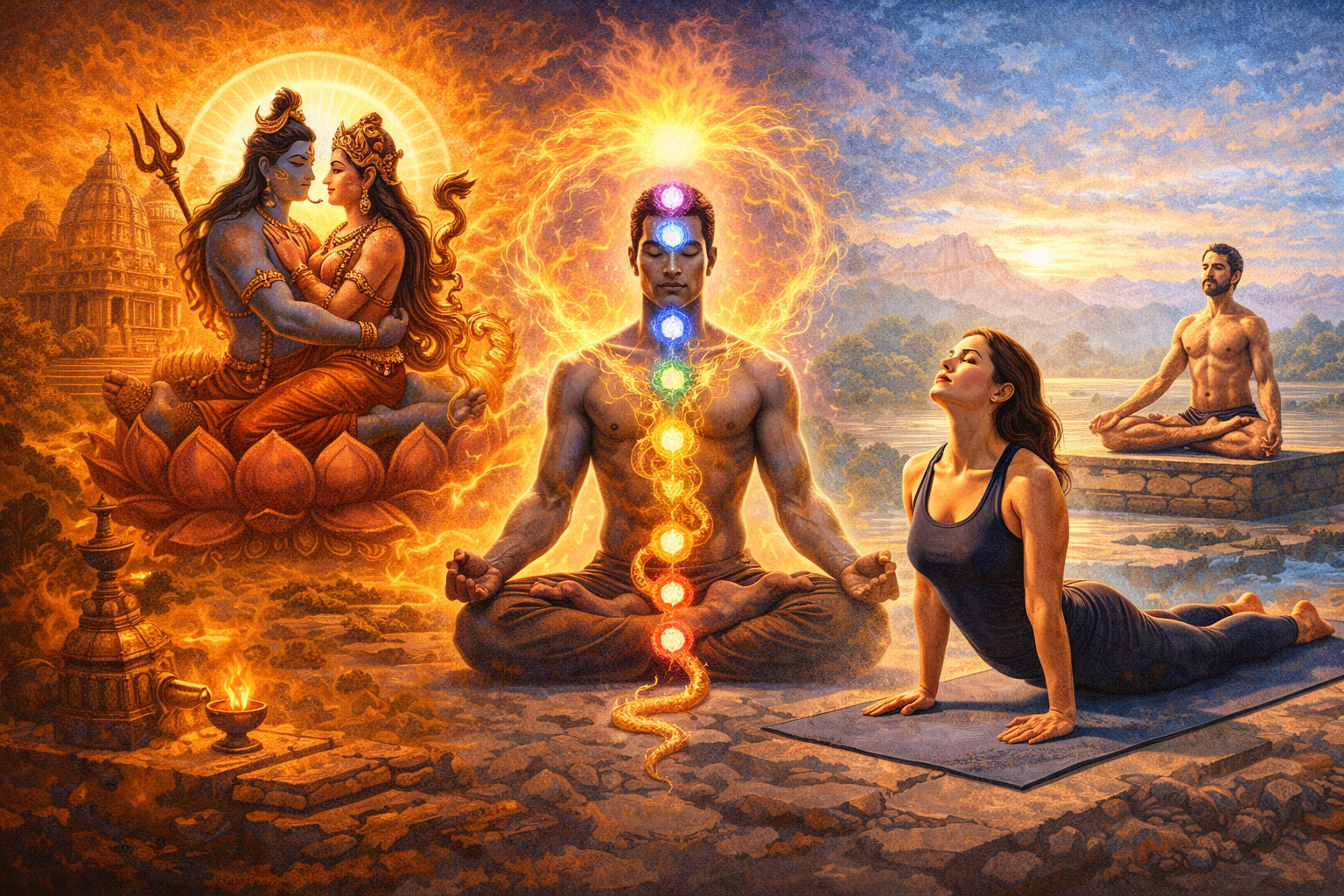
When we speak about Yoga in India, we are not just speaking about a practice. We are speaking about a way of seeing life. There came a time in our long spiritual journey when Yoga gently shifted its focus. Earlier, the path was mostly inward, away from the body, away from the senses. But slowly, our ancestors realized something deeply practical and deeply Indian. If the body is where we live every moment, then the body cannot be ignored on the spiritual path.

This understanding gave rise to Tantra.

In the Indian worldview, the body was never seen as sinful or impure. Our temples, our rituals, our festivals all celebrate life in its fullness. Tantra grew from this soil. It taught that the body is not a problem to escape from. The body is a sacred tool. If used with awareness, it can lead us to the highest truth.

Tantric yogis looked at the human body as a living temple. Just as a temple is cleaned, decorated, and prepared before worship, the body too had to be purified and strengthened before deep meditation. Breath became a sacred rhythm. Awareness became prayer. Discipline became devotion.

This was not philosophy for discussion. This was lived knowledge, passed from teacher to student, often in silence.

Kundalini: The Power That Sleeps Within

One of the most powerful ideas to emerge from Tantra is Kundalini. In our scriptures, Kundalini is described as a dormant energy resting at the base of the spine. But beyond symbols, it represents potential. Every Indian understands this idea intuitively. We often say, “Uske andar bahut shakti hai.” That inner strength, that untapped power, that is Kundalini.

Through disciplined practice, breath control, and awareness, this energy is said to rise upward through the spine, touching different centers of consciousness known as chakras. Each chakra reflects a stage of human growth and understanding.

  • Muladhara speaks of survival and grounding.
  • Svadhisthana connects with desire and creativity.
  • Manipura builds confidence and inner fire.
  • Anahata opens the heart to compassion.
  • Vishuddha refines truth and expression.
  • Ajna awakens intuition.
  • Sahasrara leads to pure awareness.

For an Indian mind, this system does not feel foreign. Our stories, our epics, our daily language are filled with references to inner fire, inner light, and awakening. Tantra simply gave structure to what was already felt.

The Emergence of Hatha Yoga

Between the ninth and fifteenth centuries, another major transformation took place. Hatha Yoga emerged as a practical method to prepare the body for higher states of awareness. Many people today think Hatha Yoga means force or physical strain. But the real meaning is balance.

“Ha” represents the sun, energy, and action.
“Tha” represents the moon, calmness, and rest.

Hatha Yoga is about balancing these two forces within us. This idea reflects the Indian philosophy of harmony. Never too much, never too little. Always the middle path.

Hatha Yoga introduced structured asanas, cleansing practices, breath techniques, mudras, and bandhas. These were not created for appearance or fitness. They were designed to make the body stable, healthy, and resilient. A body that does not distract the mind. A body that can sit still. A body that supports awareness.

This approach made Yoga accessible to more people. You no longer needed to withdraw completely from society. You could work on the body while living in the world.

Matsyendranath and Gorakhnath: Yogis Rooted in the Land

Two names stand tall in the history of Hatha Yoga: Matsyendranath and his disciple Gorakhnath. They belonged to the Nath tradition, which spread across India, Nepal, and Tibet. These yogis were not palace scholars. They lived simply, often among common people.

Gorakhnath, especially, is remembered across villages and towns even today. Temples, folk songs, and local legends still carry his presence. He taught discipline, self-reliance, and fearlessness. His message was clear. Yoga should make a person strong from within, not withdrawn from life.

This reflects a deeply Indian belief. Spirituality should support life, not reject it. A yogi should be steady in the marketplace as much as in meditation.

Why the Body Became Central to Yoga

Earlier traditions emphasized detachment from the body. Tantra and Hatha Yoga taught mastery of the body. This was not a contradiction. It was growth.

Our ancestors realized that liberation does not come from denying existence. It comes from understanding it fully. The body became a bridge between the outer world and inner awareness.

This is why modern Yoga, even when practiced in studios and homes across the world, still carries the imprint of ancient Indian wisdom. Every posture, every breath, every pause is connected to this long journey of exploration.

When we practice Yoga today, knowingly or unknowingly, we continue a tradition shaped by centuries of lived experience. A tradition born in this land, refined by seekers, and preserved through devotion. And that makes Yoga not just a practice, but a shared inheritance of Indian wisdom.

Share: Facebook Twitter Linkedin
Yoga
January 28, 2026 | joyaditya49@gmail.com

Tantra, Kundalini Yoga, and the Rise of Hatha Yoga

If the early period of Yoga was about exploration and spiritual searching, then Patanjali’s work was about structure. He did not invent Yoga. He organized it. He gave it a clear framework so that ordinary people could understand and practice it in a disciplined way.

Around 200 BCE to 400 CE, Patanjali compiled what we now know as the Yoga Sutras. It is a collection of 196 short statements. They are not stories or poems. They are direct instructions. Simple, powerful, and precise.

One of the most famous lines from the Yoga Sutras is:
“Yoga is the cessation of the fluctuations of the mind.”

In simple words, Yoga is about calming the constant noise in our head. The endless thoughts, worries, fears, comparisons, and desires. When the mind becomes still, we begin to see reality clearly.

That idea alone shows how different classical Yoga is from modern fitness Yoga.

The Eight Limbs of Yoga

Patanjali described Yoga as an eight-step path. These are known as the Ashtanga Yoga system. Each limb supports the next. Together, they create a complete lifestyle, not just a practice.

  1. Yama – Ethical discipline
    This is about how we behave with others.
    It includes:

  • Non-violence

  • Truthfulness

  • Non-stealing

  • Moderation

  • Non-possessiveness

It teaches that inner peace starts with how we treat the world.

  1. Niyama – Personal discipline
    This is about how we treat ourselves.
    It includes:

  • Cleanliness

  • Contentment

  • Self-discipline

  • Self-study

  • Surrender to a higher truth

It builds emotional stability and self-awareness.

  1. Asana – Posture
    This is the part most people know today.
    But originally, asanas were meant to make the body stable and comfortable for meditation. Not to show flexibility or strength.

  2. Pranayama – Breath control
    Breath controls energy.
    When the breath is calm, the mind becomes calm.
    Modern science now shows that slow breathing directly reduces stress hormones.

  3. Pratyahara – Withdrawal of the senses
    This is learning to turn inward.
    Not reacting to every sound, sight, or desire.
    This is where real mental control begins.

  4. Dharana – Concentration
    Holding attention on one point.
    Training the mind to stay.

  5. Dhyana – Meditation
    When concentration becomes effortless.
    A deep state of awareness.

  6. Samadhi – Complete absorption
    The state of unity.
    Where ego dissolves and clarity remains.

This was Yoga in its pure form. A psychological and spiritual science.

Yoga and Sankhya Philosophy

Yoga is deeply connected to Sankhya philosophy. Sankhya explains reality as two principles:

  • Purusha: consciousness

  • Prakriti: matter and nature

Suffering happens when consciousness identifies too much with matter.
Yoga is the method to separate them.
To see clearly who we are.

This concept later influenced psychology, neuroscience, and even modern mindfulness.

Yoga, Buddhism, and Jainism

Yoga did not exist in isolation.
It evolved alongside Buddhism and Jainism.

Buddha taught meditation, awareness, and non-attachment.
Mahavira emphasized discipline, self-control, and purity.

All three traditions believed that:

  • Desire causes suffering

  • Awareness brings freedom

  • Discipline builds peace

They used different languages but aimed for the same truth.

Yoga in the Bhagavad Gita

The Bhagavad Gita introduced three powerful yogic paths:

  • Karma Yoga: Yoga of action

  • Bhakti Yoga: Yoga of devotion

  • Jnana Yoga: Yoga of knowledge

It taught that Yoga is not limited to meditation caves.
Yoga can be lived in daily life.
Through work.
Through love.
Through wisdom.

This made Yoga practical and accessible.

Why Patanjali Still Matters Today

When you see modern mindfulness practices, therapy methods, and mental wellness programs, you will find Patanjali’s influence everywhere.

Focus.
Awareness.
Breath control.
Emotional regulation.

These are no longer spiritual ideas. They are psychological tools.

And they were written more than two thousand years ago.

That alone proves the depth of Yoga as a science of the mind.
Share: Facebook Twitter Linkedin
Yoga
January 28, 2026 | joyaditya49@gmail.com

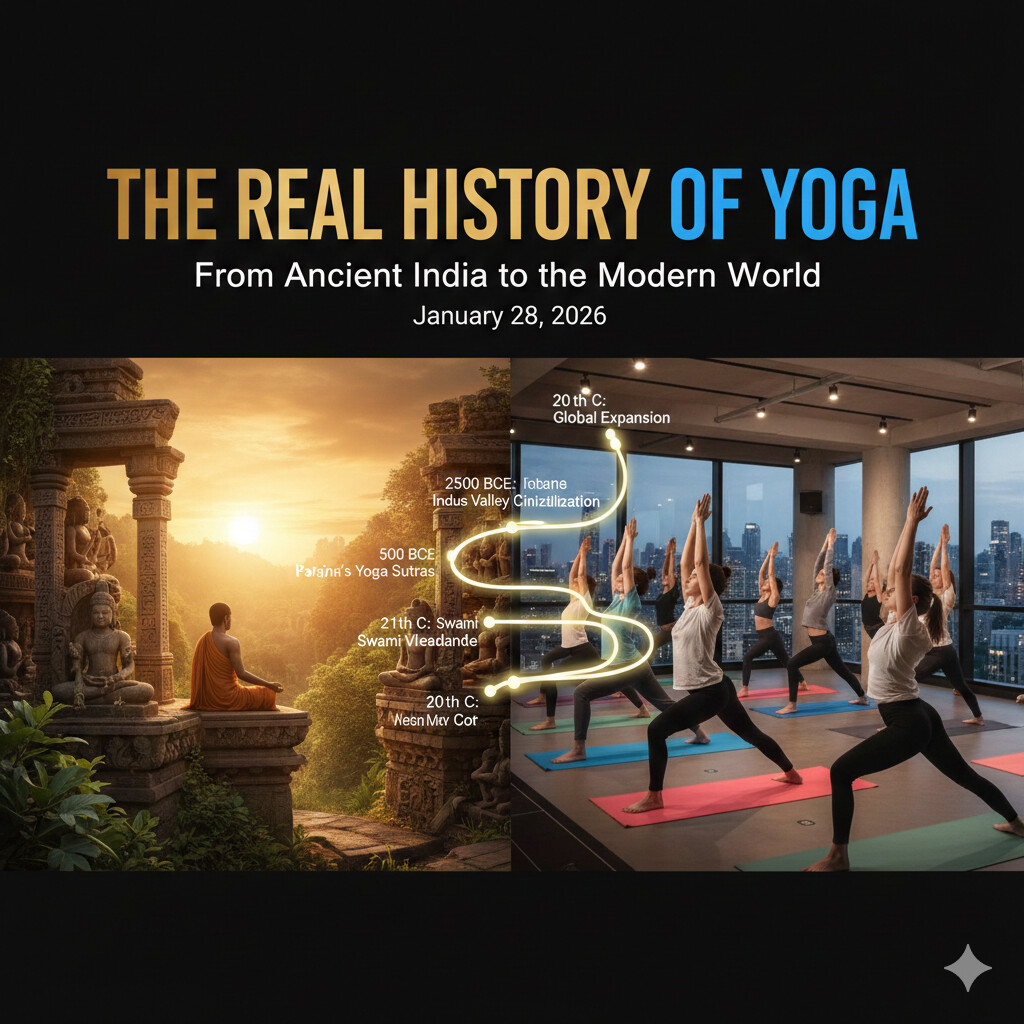
The Real History of Yoga: From Ancient India to the Modern World

To be honest, for a long time I thought Yoga was just about stretching, breathing, and maintaining physical fitness. Morning parks, yoga mats, slow movements, and calm music. That was my entire understanding of it. But when I started exploring the real history of Yoga, especially through deep documentaries and ancient references, my perspective completely changed. Yoga is not a workout system. Yoga is a way of understanding life itself.

This blog is not just written to share information. It is written from a place of curiosity and respect. Because when we reduce Yoga to a fitness trend, we lose its soul. The real purpose of Yoga was never only to make the body flexible. Its purpose was to make the mind free.

Today, Yoga is a global industry. According to the Global Wellness Institute, the wellness economy crossed 5.6 trillion dollars in recent years, and Yoga contributes significantly through classes, retreats, teacher training, and wellness tourism. The Yoga market alone is valued at over 100 billion dollars globally. Yet, most people practicing Yoga today are not aware of where it truly came from or why it was created.

That gap between popularity and understanding is what inspired me to write this blog.

Here, I want to take you back in time. Not with complicated academic language, but in a simple, honest, human way. Just like one person sharing something meaningful with another.
Yoga

What Is Yoga Really

The word “Yoga” comes from the Sanskrit root “Yuj,” which means to unite or to join. But this union is not just physical. It is the union of mind, body, and awareness. It is the connection between your outer life and your inner self.

In ancient times, Yoga was a system to understand suffering, desire, fear, and attachment. It was a method to observe the mind and slowly rise above its chaos. Physical postures were only a small part of it. They existed to prepare the body for long periods of stillness and meditation.

Yoga was never about showing flexibility or strength. It was about clarity. It was about freedom from inner conflict.

That is why when ancient texts talk about Yoga, they rarely talk about poses. They talk about discipline, awareness, restraint, balance, and deep meditation.

The Origins of Yoga in Ancient India

Yoga is not a recent invention. Its roots go back more than 5,000 years, possibly even earlier. Archaeological evidence from the Indus Valley Civilization shows seals depicting figures in meditative postures. One famous seal shows a figure sitting in what looks like a yogic pose, often associated with Shiva as Pashupati.

While historians debate exact interpretations, these findings strongly suggest that meditation and yogic practices existed long before written scriptures.

Later, Yoga began to appear more clearly in the Vedas. The Rigveda, one of the oldest texts known to humanity, speaks about inner discipline, control of the mind, and cosmic order. Although Yoga was not systematized at this stage, its spiritual foundation was being built.

The Upanishads then took these ideas deeper. They explored questions like:
Who am I?
What is consciousness?
Why do we suffer?
How can we be free?

These questions became the heart of Yoga.

Yoga was not created for physical beauty or health trends. It was created because humans were searching for truth and peace.

Yoga as a Philosophy of Liberation

In ancient India, life was seen as a cycle of birth, death, and rebirth. This cycle was called Samsara. Yoga emerged as a path to break free from this cycle.

It taught that suffering comes from ignorance. From identifying too strongly with the body, thoughts, and emotions. Yoga trained people to observe rather than react. To witness rather than chase.

This is why Yoga is deeply connected to meditation. Without meditation, Yoga loses its depth.

Why This Matters Today

We live in a time of constant distraction. Notifications, deadlines, expectations, pressure. The ancient yogis were also surrounded by chaos, just in a different form. That is why Yoga still feels relevant.

Modern science now confirms what ancient Yoga masters already knew. Studies from institutions like Harvard Medical School and the National Institutes of Health show that Yoga and meditation help reduce anxiety, improve sleep, regulate blood pressure, and improve emotional balance.

Yoga is no longer just spiritual belief. It is supported by neuroscience and psychology.

Share: Facebook Twitter Linkedin
Consistency
August 9, 2025 | joyaditya49@gmail.com

The Power of Consistency: How Small Daily Actions Transform Your Life

We all dream of living a better life—being healthier, more successful, and truly happy. But most of us struggle to stay consistent with the habits that can get us there. We start with motivation, but somewhere along the way, we lose momentum.

The truth is, you don’t need massive changes to transform your life. You just need small, consistent actions every day.

In this article, I’m going to share how you can build consistency and why it matters more than motivation or talent.

Why Consistency Matters More Than Motivation

Motivation is great, but it’s temporary. Some days you’ll feel inspired, and other days you won’t. If you rely only on motivation, you’ll never stick to your goals long enough to see real results.

Consistency, on the other hand, is what gets you across the finish line. Even small daily actions compound over time and create massive change.

Think of it like planting seeds. One seed might not look like much, but if you water it every day, it will grow into a tree.

Start Small – It’s Easier Than You Think

The biggest mistake people make is starting too big. They set huge goals that feel overwhelming. When life gets busy, those goals are the first things to go.

Instead, start small and make it simple:

  • Want to get healthier? Walk for 10 minutes a day.

  • Want to learn something new? Read 2 pages of a book daily.

  • Want to save money? Start by saving just a small amount every week.

These small actions are easier to stick to and will build momentum over time.

Turn Actions Into Habits

Habits are powerful because once they’re set, they become automatic. You don’t have to think about them anymore, and they take less effort.

Here’s how to make habits stick:

  1. Attach them to something you already do. For example, meditate after brushing your teeth.

  2. Keep them visible. Leave a book on your pillow as a reminder to read before bed.

  3. Track your progress. Checking off a habit daily can be surprisingly motivating.

The Compound Effect: Small Wins Add Up

Consistency works like compound interest. The small steps you take today might not seem like much, but over weeks and months, the results are life-changing.

  • 15 minutes of exercise every day can lead to significant fitness improvements over a year.

  • Writing 300 words daily can turn into a full book within months.

  • Saving a small percentage of your income can lead to financial security in the future.

What to Do When You Miss a Day

Life will get in the way sometimes, and that’s okay. The key is not to quit completely. Missing one day won’t ruin your progress, but giving up will.

Instead of beating yourself up, simply start again the next day. Progress is never about perfection—it’s about persistence.

How Small Habits—and Small Decisions—Transformed My Life

I’ve come to realize that real success doesn’t happen overnight. The most remarkable people in history didn’t wake up one day with empires, masterpieces, or legacies—they built them, piece by piece, through consistent micro-habits. For me, personal transformation began with tiny changes: adjusting my morning routine, making small tweaks to my diet, and being more mindful of how I spent my time. At first, those changes seemed insignificant. But over time, they compounded in ways I never could have predicted.

That’s the power of the butterfly effect—how one small decision can set off a chain reaction of meaningful change. I saw this concept come to life when I learned about the S.I. Newhouse School of Public Communications. What started as a small Department of Journalism in 1919 eventually grew into one of the world’s most respected institutions for media and communication. Every decision made along the way, no matter how minor it seemed at the time, contributed to the school’s evolution and impact.

It’s a powerful reminder that greatness isn’t the result of one big leap—it’s the outcome of small, consistent steps in the right direction. And that’s a lesson I carry with me every day.

Make It Personal: What Do You Want Most?

Take a moment to think about one area in your life you’d like to improve. Is it your health? Career? Relationships?

Now, write down one simple daily action that would move you closer to that goal. Don’t overthink it. Keep it small and manageable.

This is where your journey begins.

Final Thoughts: Small Steps, Big Change

You don’t need to overhaul your entire life in one go. All you need is one small step today, and another tomorrow. Over time, those steps will take you further than you ever imagined.

So start now. Choose one habit and commit to it for the next seven days. At the end of the week, you’ll already feel the difference.

Your Turn

What small action will you commit to today? Share it with us in the comments—I’d love to know!

Remember: progress is built on small, consistent actions. Be patient, trust the process, and your life will transform.

This guide is for educational and informational purposes only and is not a substitute for professional medical or health advice, examination, diagnosis, or treatment. Always seek the advice of a qualified healthcare professional, such as your physician or a physical therapist, before starting any new fitness program or making changes to your current routine. If you experience any sharp or persistent pain, stop exercising immediately and consult a medical professional. The author and publisher are not responsible for any injuries or health issues that may result from following the advice provided in this guide.

Share: Facebook Twitter Linkedin