
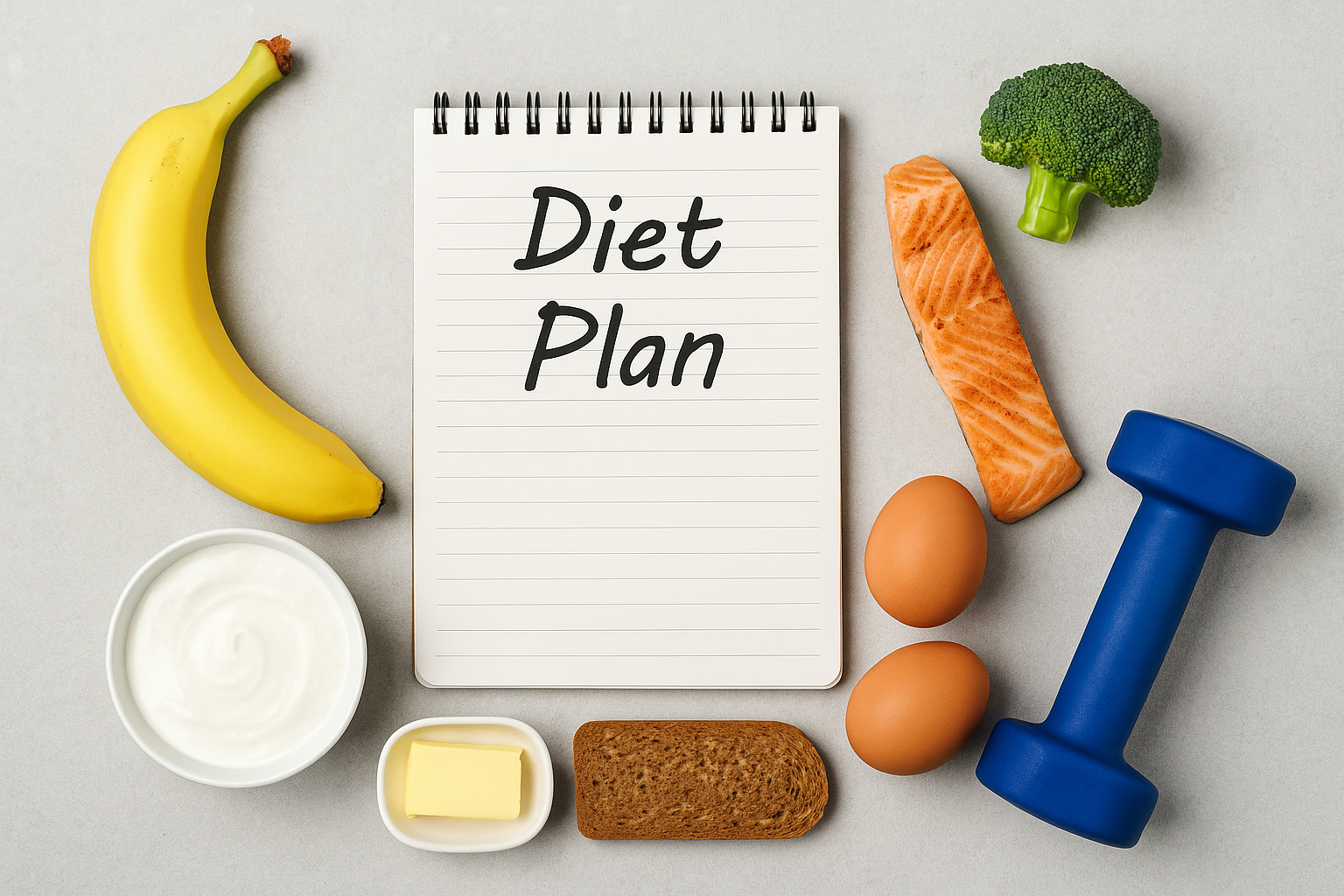
Creating an effective diet plan that aligns with your goals—whether it’s fat loss, muscle gain, or simply maintaining good health—requires thoughtful planning and consistent execution. I’ve gone through my own trial and error over the years, and now I’m here to walk you through a step-by-step guide that helped me build a sustainable, results-driven nutrition routine.
1. Clearly Define Your Goal
Start by identifying your primary objective. Your diet strategy will depend heavily on this.
Fat Loss (Cutting): Create a calorie deficit of approximately 15–20% below your daily maintenance level. This allows for steady fat loss while minimizing muscle breakdown.
Muscle Gain (Lean Bulking): Aim for a moderate calorie surplus—typically 5–10% above your maintenance calories. This supports muscle growth while keeping fat gain under control.
General Health and Maintenance: Focus on meeting your maintenance calorie needs to support daily activity, metabolism, and overall well-being.
2. Calculate Your Maintenance Calories
To establish your calorie baseline, I used the Mifflin–St Jeor formula. You can easily find calculators online where you input your age, weight, height, and activity level.
Track your weight and energy for a couple of weeks. If you’re gaining or losing weight too fast, adjust your intake by 100–200 calories.
3. Set Your Caloric Targets
Here’s how I calculated my own:
Cutting Example:
- Maintenance = 2,500 kcal
- Target = ~2,000 kcal (20% deficit)
- Bulking Example:
- Maintenance = 2,500 kcal
- Target = ~2,750 kcal (10% surplus)
4. Prioritize Protein Intake
Protein is your best friend whether you’re leaning out or building mass. Aim for:
1.5–2 grams per kilogram of body weight per day
If you weigh 70 kg, that’s 105–140 grams daily.
Top protein sources I include regularly:
- Chicken breast
- Fish and seafood
- Lean beef or turkey
- Eggs and Greek yogurt
- Tofu, tempeh, legumes
5. Balance the Macronutrients
After setting your protein, the rest of your calories should come from healthy fats and carbs:
Fats: 25–30% of total calories (olive oil, nuts, seeds, avocados, fatty fish)
Carbohydrates: Fill the rest with complex carbs (whole grains, vegetables, fruits, legumes)
Example for a 2,000 kcal fat-loss plan:
| Macronutrient | Grams/Day | Calories |
|---|---|---|
| Protein | 140g | 560 kcal |
| Fats | 67g | 603 kcal |
| Carbohydrates | 210g | ~840 kcal |
6. Plan Nutrient Timing Strategically
This was a game-changer for me:
- Pre-Workout: Carbs + moderate protein (banana + peanut butter + whey)
- Post-Workout: Fast-digesting carbs + protein (protein shake + white rice + tuna)
- Throughout the day: Keep meals evenly spaced to maintain energy
7. Stay Hydrated and Focus on Micronutrients
Water matters more than you think! I drink about 2.5 to 3 liters daily.
Make sure your meals are colorful—add a variety of fruits and veggies for optimal vitamin and mineral intake.
8. Track Your Progress and Adjust Accordingly
Progress isn’t always linear. I use:
- Weekly weigh-ins
- Progress photos
- How I feel during workouts
If stalled:
- Fat loss? Drop 100–200 kcal
- Muscle gain? Add 100–200 kcal
9. Be Flexible and Focus on Sustainability
This one’s personal: I used to chase perfection, and it burned me out.
Now I enjoy a “flex meal” once a week—pizza night, anyone? As long as I stay consistent the rest of the week, I’m making progress.
10. Use Supplements Wisely (Optional)
Supplements are there to supplement, not replace meals. My go-to’s:
- Whey protein (when I’m short on time)
- Multivitamin (to fill in gaps)
- Omega-3s (for heart and brain health)
- Creatine monohydrate (for muscle and strength)
11. Sample Meal Plan: 2,000 kcal Fat-Loss Diet
| Meal | Foods Included |
| Breakfast | Oats cooked with milk, 1 banana, 2 whole eggs |
| Snack | Greek yogurt with mixed berries |
| Lunch | Grilled chicken, quinoa, steamed mixed vegetables |
| Pre-Workout | 1 piece of fruit and a protein shake |
| Post-Workout | Protein shake with cooked white rice and tuna |
| Dinner | Baked salmon, roasted sweet potato, green salad |
| Evening Snack | Cottage cheese or a small handful of nuts |
Final Takeaways
Know your goal and align your intake accordingly.
Hit your protein, balance fats and carbs.
Track everything, and tweak when needed.
Stay consistent—not perfect.
I’ve learned that it’s not about extreme restriction or trendy diets. It’s about creating something you can stick to, enjoy, and grow with.
Stick with it, stay honest with yourself, and let your results speak over time. This perfect diet routine isn’t just a plan—it’s a lifestyle shift you’ll thank yourself for later.
This guide is for educational and informational purposes only and is not a substitute for professional medical or health advice, examination, diagnosis, or treatment. Always seek the advice of a qualified healthcare professional, such as your physician or a physical therapist, before starting any new fitness program or making changes to your current routine. If you experience any sharp or persistent pain, stop exercising immediately and consult a medical professional. The author and publisher are not responsible for any injuries or health issues that may result from following the advice provided in this guide.