
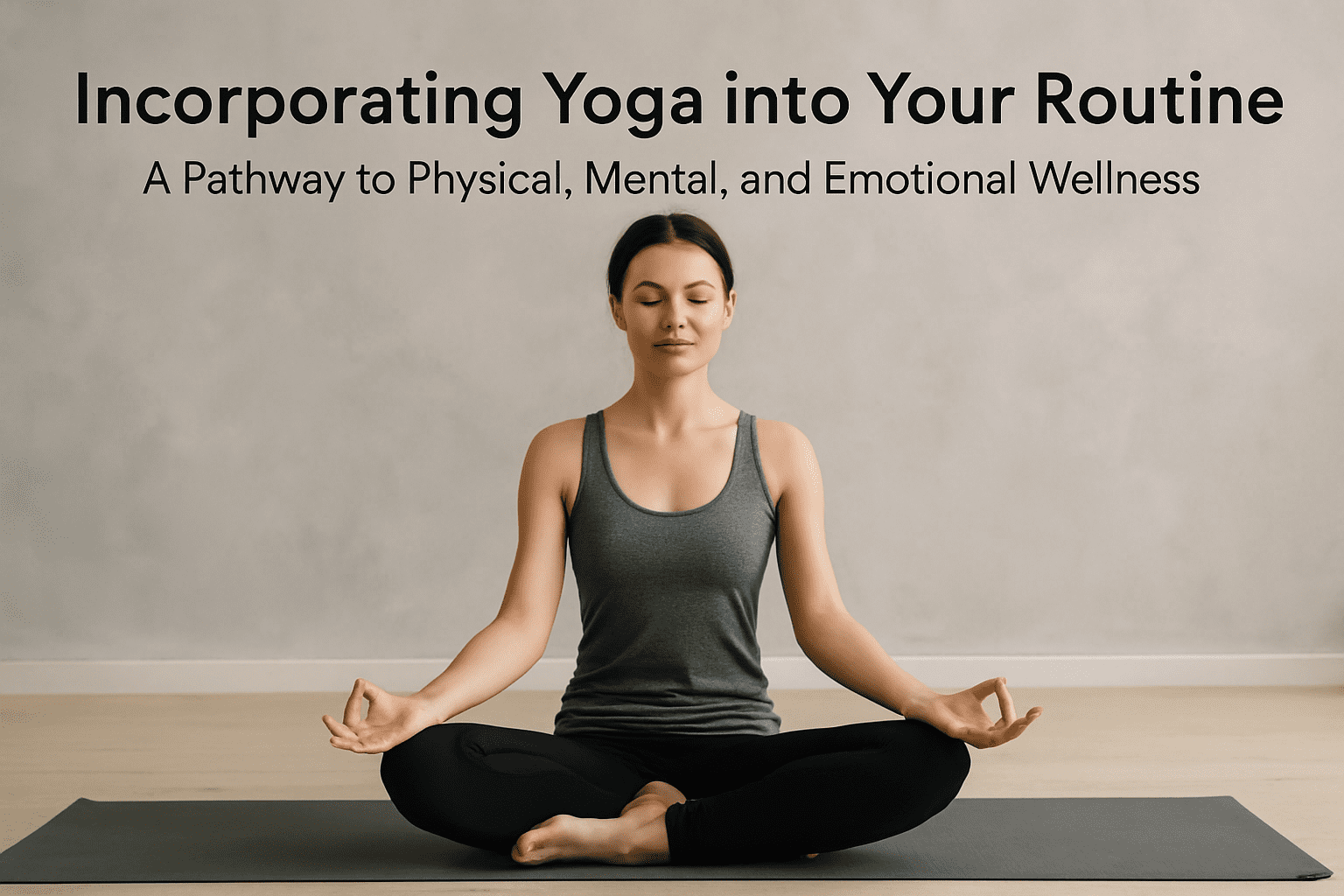
If you’re like most of us, you’ve probably scrolled through Instagram and seen countless yoga reels that make you think, “I should start doing yoga tomorrow.” It’s easy to get inspired at the moment, but when the next morning comes, that motivation often fades away. Incorporating yoga into your routine doesn’t have to be something you keep putting off—it’s all about making small, manageable changes that fit into your lifestyle. Whether you’re looking to improve flexibility, reduce stress, or just create a sense of calm in your day, yoga can help.
In this article you are going to find out how you could easily weave into your lifestyle the practice of yoga, irrespective of your physical fitness. There are various yoga forms, easy positions for a beginner and how to practice regularly as well. By the end of this article, you will be equipped with the knowledge to start your own yoga practice and reap the rewards both physically and mentally.
The Benefits of Yoga
To begin with, anyone practising yoga may need to know the causes for the increase in the reputation of this field; Yoga is a broad concept that carries a rich perspective of contribution towards the health of the human body, mental well-being and spirituality. Some of the most notable advantages include:
1. Increase flexibility and strength
One of the most acknowledged advantages of practising this activity is that it enhances flexibility. A majority of the yoga positions (asanas) include pulling and lengthening muscles providing joint flexibility and freedom. Lack of flexibility is one of the problems which is easily addressed with regular practice and callers can significantly gain flexibility after a certain period of practice. Yoga actually helps in strengthening the muscles at the same time as well.
2. Better Concentration and Memory
Yoga is a body of work that focuses on the art of watching your thoughts and being conscious of your breathing. It makes you to be focused making you have fewer thoughts interrupting your day-to-day activities. Yoga thus helps bring improvements in cognitive functions, such as clear thinking, concentration of the mind and focus. The other practice is pranayama or partially controlled breathing which also leads to relaxation and a consequent decrease in anxiety. Most people complain of enhanced inner focus and mental clarity after taking a yoga class.
3. Reduction of stress and attaining a balance of emotions
Stress therefore has become a challenge that faces most people given the busy world we live in. Yoga triggers the parasympathetic system, which helps encourage rest and digestion in the body. It also assists in reversing the body’s stress response and can help you feel more relaxed while travelling. There is a discharging of the tension which brings a balanced feeling as well as a lowering of cortisol, the stress hormone, by enacting breathing and meditating during yoga. In general, it may take some time and consistent practice of yoga to help with anxiety, depression or emotional instability.
4. Better Posture and Position
This is an area where people with bad posture could benefit from yoga. Working people who sit at their computers for many hours or people who engage in monotonous activities like sitting or find that practising yoga relieves pressure on the spine and also corrects the way they sit and stand. Specific exercises which help to relieve the impact of sitting are those that stretch the hip flexors, open the chest area, and strengthen back muscles.
5. Better Sleep
Yoga exercise as a routine helps in enhancing the quality of sleep. Meditation, deep breathing typically incorporated in yoga helps to switch the body’s relaxation response thereby improving sleep. Yoga can also tend to reduce and let off the physical stress that has been experienced during the day hence providing a more effective sleeping pattern.
Incorporating Yoga into Your Lifestyle
Since we’ve seen all the advantages of practicing yoga it is now high time we saw how we can manage to make it a part of our everyday routine. So here are some tips for anyone, whether they are first-time or long-term practitioners of yoga to ensure that he or she is consistent with practice.
1. Begin Little by Little
If you are a beginner to yoga, then there is no way you can practice yoga for an extended duration of time. Yoga does not need hours of practice to produce results every other day. The nice thing is that even a 15 to 20-minute session can be productive the first time you start doing it. With increased ease to the poses and sequences, it is possible to increase your practice time to increase the benefits gained. Firstly, it is recommended to exercise with yoga two to three times a week and gradually increase the frequency is accustomed to it.
2. Establish a Regular Schedule for Practice
Yoga needs to be practised more often and in the same manner to build up the exercise regimen. There is nothing as important as having a particular time that is most appropriate, especially for you and sticking to it. Some other individuals would rather carry out a yoga session early in the morning, so they will maintain harmony throughout the day whereas others will prefer to practice yoga at night as a way of decompressing after a busy schedule. However, what is most important is to establish it as one of your habits, which can then provide all the positive consequences.
3. Designate an Area Just for Yoga
If you can do your practice in a special room then you are already creating a structure and an energy. The space doesn’t have to be big, but the best is to be isolated, clean, and sufficient to stretch, breathe, and get up from wherever you find yourself. If possible bring someone else in the room for example use candles, some nice oils or nice music to facilitate your practices. This should help you to condition yourself to link the space with relaxation and the ability to concentrate.
4. Yoga As Part of Your Daily Program
When people consider practicing yoga they don’t necessarily have to think about setting a separate time to practice the art. If you are starting out, you can add pieces of yoga to your everyday schedule. For instance, you can take deep breaths or do some stretching during the lunch hour, while it is boiling, or after waking up. It is established that if you take short sessions of yoga at intervals throughout the day, you will derive all the physical and mental benefits you get from a normal yoga session.
5. Read More About Various Styles of Yoga
Yoga is a broad category of exercise which encompasses a large number of techniques and methods of practice. There are active styles, such as Hatha or Vinyasa that highlight movement and transitions, and more relaxing styles as Yin or Restorative that deal with stretching. Of course, depending on the aims and personal learning you may consider different types of yoga to be most appropriate for you. For instance, if you want to get more intense exercise, you could try Vinyasa or Power Yoga. If you are trying to achieve a state of low intensity and stress-Free or Inversions Yoga might be suitable for you.
6. Either navigate the internet or sign up for classes
Yoga is one of those things that has an almost endless amount of information. it is available for anyone from a complete novice to a highly experienced practitioner. Exercising through videos also gives you instructions about various yoga asanas and diets. Furthermore, even if you prefer to take classes at local studios, there are plenty of those who teach in person or online, you just need to choose a certified instructor. A class setting can help you stay motivated and you will get feedback on your form which is very important in avoiding injury when practicing.
7. Listen to Your Body
The pursuit of the self or discovery of the self is probably one of the core principles of yoga. Never ignore your body signals and go through the exercises as comfortably as you can. Do not try to force yourself into a particular position or stretch that feels unbearable or brings you slight pain. It is not a workout mistake if you cannot do some of the poses perfectly right the first time, the point of yoga is to focus on your breathing and the here and now. As for the particular moves and exercises always remember that if you have a question or doubt, do not hesitate to ask a certified trainer.
8. Breath control – or ‘Pranayama
Pranayama is an elementary practice of yoga. Pranayama or breathing exercises tend to control the energy pathways in the body, settle down the mind, and promote rest. If you are a beginner, even just adding techniques of breathing like Ujjayi breath, which is a slow deep breath, similar to ocean waves, goes a long way. In the long run, pranayama also works to reduce stress and increase concentration during regular activities in your lifetime.
9. Make Yoga a Lifestyle
Yoga is not only focused on the exercise utilized in it; it is a science which teaches one the way to live a better life. To maximize yoga in one’s life, practice the five principles of yoga even after leaving the practice session. This can include feeling grateful, being kind, and: needing no reason to smile. Yoga is not a destination that can be reached, and the further a person is in his/her practice, the less yoga should be only positive council, the more it should be inspiring for life solutions.
Conclusion
Yoga is a great way to get into shape and even protect the body from such diseases, it has an impact on every person physically and mentally. It will not be difficult to make yoga a regular part of your life, especially since starting small, sticking with consistency, and the time factor suggested above. In as much as practising yoga advanced you will realize some impacts on the flexibility, strength, posture, concentration, and health of an individual. Yoga does not necessarily have to be a physical fitness exercise for it to conquer the challenge, what is needed is patience, a willingness to persevere and most importantly, be mindful.
This guide is for educational and informational purposes only and is not a substitute for professional medical or health advice, examination, diagnosis, or treatment. Always seek the advice of a qualified healthcare professional, such as your physician or a physical therapist, before starting any new fitness program or making changes to your current routine. If you experience any sharp or persistent pain, stop exercising immediately and consult a medical professional. The author and publisher are not responsible for any injuries or health issues that may result from following the advice provided in this guide.