
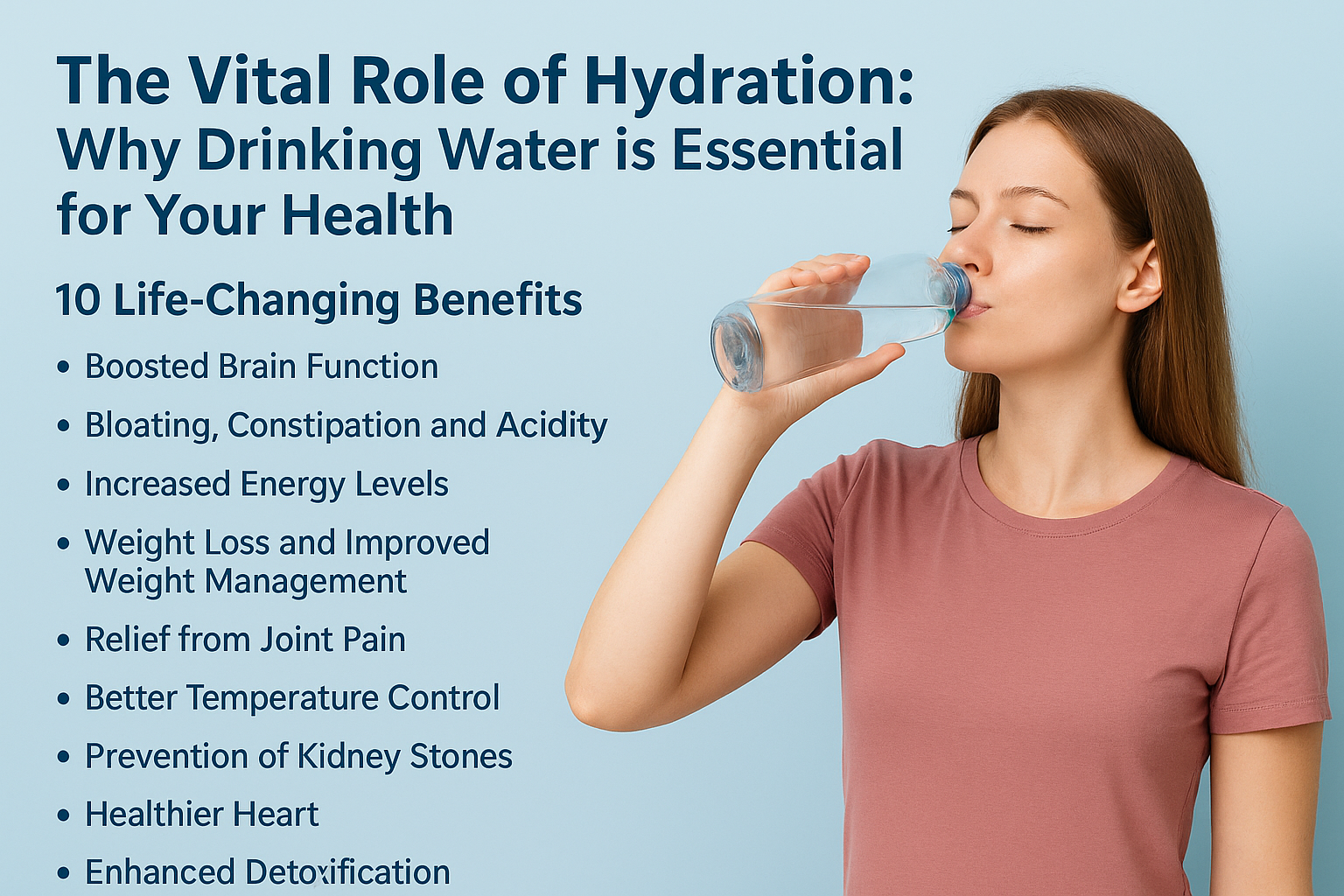
Have you ever wondered how much water your body truly needs each day? While it’s easy to overlook, drinking enough water plays a vital role in maintaining your overall well-being. The benefits of drinking water are far-reaching from improving digestion and energy levels to supporting brain function and skin health. This guide dives into why water is essential, how it enhances your performance and health, and how to stay properly hydrated throughout the day.
Why Is It Important to Drink Water?
Water makes up about 60% of the human body and is crucial for nearly every bodily function. Without adequate hydration, your energy dips, concentration suffers, and even your skin and joints feel the impact. Proper hydration:
- Regulates body temperature
- Lubricates joints
- Flushes out toxins
- Aids digestion
- Maintains skin health
In short, water is the foundation of good health. Prioritizing hydration is one of the simplest and most powerful ways to support your body.
10 Life-Changing Benefits of Drinking Water
1. Boosted Brain Function
Even mild dehydration (just 1–2%) can impair mood, memory, and concentration. Staying hydrated enhances mental clarity, focus, and cognitive performance. It also helps reduce feelings of anxiety and mental fatigue.
2. Improved Digestion and Less Bloating
Water aids in breaking down food and moving it smoothly through your digestive system. It helps prevent constipation, gas, bloating, and acidity. Drinking mineral water with magnesium or sodium can further ease digestive issues.
3. Increased Energy Levels
Dehydration slows blood circulation, reducing oxygen flow to the brain and muscles—leading to fatigue. Hydration boosts circulation and helps you feel more energized throughout the day.
4. Supports Weight Loss and Management
Drinking water before meals can curb appetite, reduce calorie intake, and enhance fat metabolism. Replacing sugary drinks with water is one of the easiest ways to cut down on excess calories.
5. Relief from Joint Pain
Water cushions and lubricates joints through synovial fluid. Hydrated cartilage remains soft and smooth, reducing stiffness and discomfort—especially helpful for those with arthritis.
6. Better Temperature Regulation
Sweating is your body’s natural cooling mechanism. When dehydrated, your ability to sweat and regulate temperature is impaired, increasing the risk of heat exhaustion.
7. Prevention of Kidney Stones and UTIs
Water dilutes minerals in the urinary tract, preventing the formation of kidney stones. It also flushes out bacteria, reducing the risk of urinary tract infections (UTIs).
8. A Healthier Heart
Dehydration causes blood to thicken, making it harder for the heart to pump. Water helps maintain healthy blood viscosity, electrolyte balance, and blood pressure—vital for heart health.
9. Natural Detoxification
Water is essential for the body’s detox processes—sweating, urination, and bowel movements. Adequate hydration supports liver and kidney function and keeps your system clean.
10. Fewer Headaches
Headaches and migraines are often linked to dehydration. Staying hydrated helps prevent and relieve this pain by maintaining healthy fluid levels in the brain and tissues.
How to Stay Hydrated: 5 Practical Tips
1. Follow the 8×8 RuleAim to drink eight 8-ounce glasses (about 2 liters) of water per day. Alternatively, drink about one-third of your body weight in ounces daily.
2. Don’t Wait Until You’re ThirstyThirst is a sign that you’re already mildly dehydrated. Sip water consistently throughout the day, not just when you feel thirsty.
3. Choose Water Over Sugary DrinksOpt for water or non-caloric beverages like herbal teas and sparkling water. These are healthier choices that help keep you hydrated without excess sugar.
4. Carry a Reusable Water BottleKeep a water bottle with you at work, the gym, or while commuting. This encourages regular sipping and makes hydration more convenient.
5. Hydrate More in Heat or During ExerciseWhen it’s hot or you’re physically active, you lose more fluids through sweat. Drink extra water during and after exercise or any activity in warm weather.
Signs of Severe Dehydration: When to Seek Help
While mild dehydration is common, severe cases need medical attention. Watch for symptoms like:
- Dizziness or fainting
- Dry mouth or skin
- Rapid heartbeat or breathing
- Dark urine
- Difficulty urinating
Final Thoughts: Appreciate Your Body—Drink More Water
The benefits of drinking water go far beyond quenching thirst. From improving digestion to supporting brain and heart health, hydration touches every part of your wellness. The next time you feel sluggish, hungry, or stressed, grab a glass of water. Your body will thank you.
So, let’s raise a glass—to better energy, a clearer mind, and a healthier you. Stay hydrated, stay healthy!
This guide is for educational and informational purposes only and is not a substitute for professional medical or health advice, examination, diagnosis, or treatment. Always seek the advice of a qualified healthcare professional, such as your physician or a physical therapist, before starting any new fitness program or making changes to your current routine. If you experience any sharp or persistent pain, stop exercising immediately and consult a medical professional. The author and publisher are not responsible for any injuries or health issues that may result from following the advice provided in this guide.